More and more people are dreaming of living off the grid: growing their own food, making their own power, drawing their own water, and depending less on systems that can fail or keep getting more expensive. It’s a beautiful dream, and it goes best with a plan.
This checklist walks through the steps, with special attention to the rules and realities here in Arkansas. Whether you’re just starting to wonder or ready to make the leap, it will help you ask the right questions. At the end, I’ll share what I’ve learned about off-grid living from my own years at Living Springs Log House in Madison County.
Step 1: Plan Before You Move
- Get your finances ready. Make a realistic budget and pay down debt where you can. Off-grid systems cost money up front, and freedom from monthly bills is part of the payoff.
- Decide how far off the grid you want to go. There are three common paths:
- Grid-tied: solar panels feed your home, and the utility fills in the gaps.
- Hybrid: solar plus batteries, with the grid kept as a backup.
- Fully off-grid: no utility connection at all; you produce and store everything yourself.
Many families start grid-tied or hybrid and move toward full independence as their skills and systems grow.
- Think about remoteness. How close do you want to be to town, a hospital, a feed store, or friends? Nearby community makes rural life easier and richer.
- Talk to your insurance company early. Wood stoves, solar, and alternative systems can all affect your homeowner’s coverage. Ask before you install, not after.
Step 2: Know the Arkansas Rules
Off-grid living is legal in Arkansas, and rural counties are often less restrictive than cities. But a few state rules apply no matter where you live, and knowing them up front saves headaches.
Solar and your electric bill. Arkansas changed its net metering law in 2023 (Act 278). Homeowners who installed solar by September 30, 2024 kept full one-for-one credit for the extra power they send to the grid, locked in through 2040. Newer systems are credited at a much lower rate based on the utility’s “avoided cost,” and credits are netted in real time rather than banked from month to month. In plain terms: today, solar pays off best when you use the power yourself, which makes battery storage and daytime energy use more valuable than before. Before installing a grid-tied or hybrid system, contact your electric cooperative about its interconnection application and current rates.
Federal tax credits have ended. The federal tax credits that once covered 30% of the cost of home solar and batteries, along with the credit for efficient wood and biomass stoves, ended for installations completed after December 31, 2025. Budget without them, and check with a tax professional for any current state or local incentives.
Septic and wastewater. In Arkansas, most homeowners need a permit from the Arkansas Department of Health to install a new septic system, designed by a licensed “Designated Representative” (usually an engineer, surveyor, sanitarian, or master plumber). There is one exemption: a single home on ten or more acres where every part of the system sits more than 200 feet from any property line. Even then, the system must meet state standards. If you’re considering a composting toilet or graywater system, check with your county health unit’s Onsite Environmental Specialist first.
Wells and surface water. Drilling a new well and drawing from public surface water can require state permits. Rainwater collection rules are not clearly spelled out for homeowners, so check with the Department of Health before relying on rainwater for drinking.
Wood stoves. Many areas require a building permit for a wood stove, and an improper installation can void your homeowner’s insurance or cause trouble when you sell. See Step 6 for the safety basics.
Step 3: Start Growing Your Own Food Now
- Garden wherever you are today. Even a few raised beds or containers will teach you more than any book.
- Explore different growing methods. Permaculture, no-till beds, cover crops, and season extension can all stretch your harvest.
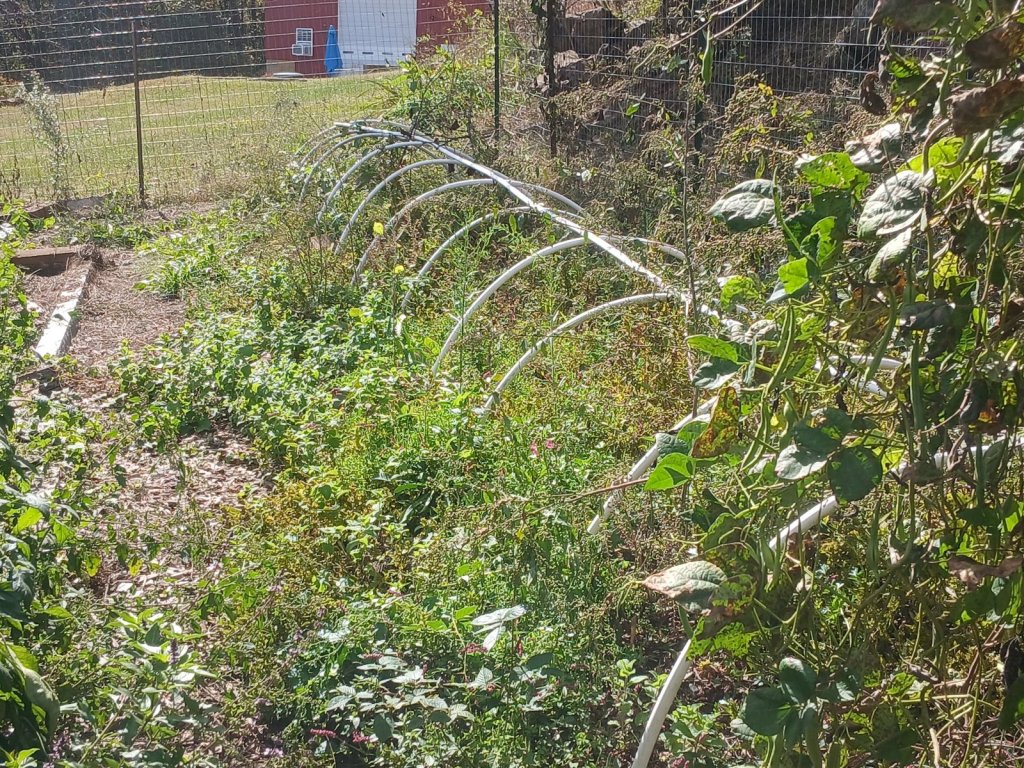
- Grow through the winter. Cold frames, row covers, and protected indoor spaces can keep greens and herbs coming in the colder months.
- Learn from people who are already doing it. Volunteer on a farm, take a class through the University of Arkansas Cooperative Extension, or apprentice with a seasoned gardener.
Step 4: Learn to Preserve What You Grow
- Canning and pickling turn a summer harvest into winter meals. Follow tested recipes for safety.
- Dehydrating is simple and energy-light, perfect for herbs, fruit, and greens. A solar dehydrator uses no power at all.
- Cold storage like a root cellar keeps potatoes, squash, apples, and root crops for months without electricity.
Step 5: Choose the Right Land
- Water comes first. A spring, well, or other dependable source is the single most important feature of off-grid land.
- Look at the soil. Healthy soil means easier, more abundant gardens.
- Notice the sun. Southern exposure makes solar power and gardening far more productive.
- Look for firewood. Wooded acreage on or near the property can heat your home for years.
- Consider your neighbors. Good neighbors are a blessing when you need a hand, a ride, or a shared workday.
- Prefer land where someone has already made a life. An existing home, water system, and gardens can save years of hard work and expense.
Step 6: Plan Your Off-Grid Systems
Power: Solar
- Know your sunshine. Arkansas averages a little over 5 “peak sun hours” a day, slightly above the national average. But the seasons matter: June brings close to 7 hours, while December drops to around 3. Plan your system for winter, not summer.
- Cut your energy use first. Efficient appliances and LED lighting shrink the size, and cost, of the system you need.
- Add battery storage if you want power at night, during outages, or to go fully off-grid. Under Arkansas’s current rules, batteries also help you use more of your own solar power.
- Have a backup. A small generator can carry you through long cloudy stretches.
- Use a licensed installer and get permits. Most counties require electrical permits for solar.
Heat: Wood Stoves and Cookstoves
- Choose an EPA-certified stove. Newer certified stoves burn cleaner, use less wood, and often need less clearance from walls.
- Respect clearances. An uncertified stove needs about 36 inches of space from anything that can burn. Certified stoves follow the manufacturer’s listed clearances.
- Use a proper hearth. The stove must sit on a non-combustible surface like stone, brick, tile, or concrete.
- Build the chimney right. The national fire safety standard calls for the chimney to rise at least 3 feet above where it passes through the roof, and 2 feet higher than anything within 10 feet.
- Install smoke and carbon monoxide detectors, and have the chimney inspected and cleaned regularly.
- Plan your firewood. Cut and stack wood well ahead so it’s dry and seasoned before you burn it.
- Consider a wood cookstove. A wood cookstove heats your home and cooks your meals with the same fire, and many have a water reservoir for hot water too. Keep in mind there’s a learning curve to controlling the heat, they warm the kitchen in summer (many families keep a backup way to cook for hot months), and parts for antique stoves can be hard to find. A new, certified cookstove avoids most of those problems.
Water: Springs, Wells, and Testing
- Test your water regularly. The Arkansas Department of Health tests private drinking water for coliform bacteria and E. coli for $17 a sample. Pick up a collection kit at your local county health unit; samples must reach the lab within 30 hours. For minerals or chemicals, use a private environmental lab.
- Protect your spring. Extension experts recommend a watertight, covered spring box; a ditch uphill to divert surface runoff; and keeping livestock away from the area around the spring.
- Test before and after heavy rains, and watch for any change in color, taste, smell, or flow. If water ever tests positive for bacteria, disinfect the system and retest before drinking.
- Filter at the tap for extra peace of mind.
- Protect lines from freezing in winter.
Waste, Access, and Communication
- Wastewater: Follow the state septic rules in Step 2, and keep septic systems well away from your water source.
- Roads: Think about access in every season, especially after heavy rains.
- Communication: Check cell signal and internet options, especially if you plan to work from home.
Step 7: Make the Move and Keep Learning
- Install and test your systems before you depend on them fully.
- Establish your gardens and any outbuildings you’ll need.
- Take care of your health. Keep a well-stocked first aid kit and know where the nearest medical care is.
- Transition in stages. Going off-grid one system at a time lets you learn without risking comfort or safety.
- Be patient with yourself. Off-grid living is a skill you grow into, season by season.
What I’ve Learned at Living Springs Log House
Living Springs Log House, on 14.75 acres near Huntsville in Madison County, Arkansas, is connected to the grid. Living here has shown me how someone could move toward off-grid living one step at a time, without giving up every comfort at once.
Sunlight. The land has good southern exposure, with plenty of sun for gardens and, someday, solar panels.
Spring water by gravity. Our spring sends water down by gravity, with no pump needed. I’ve been grateful for that, because it keeps flowing even when the power goes out.
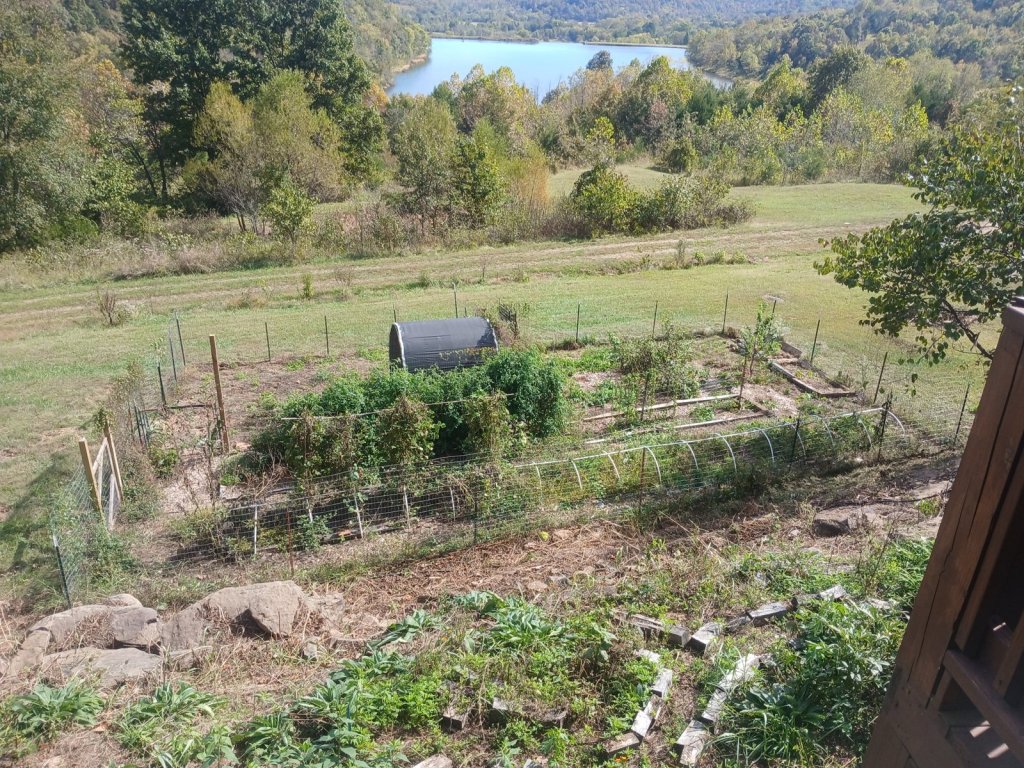
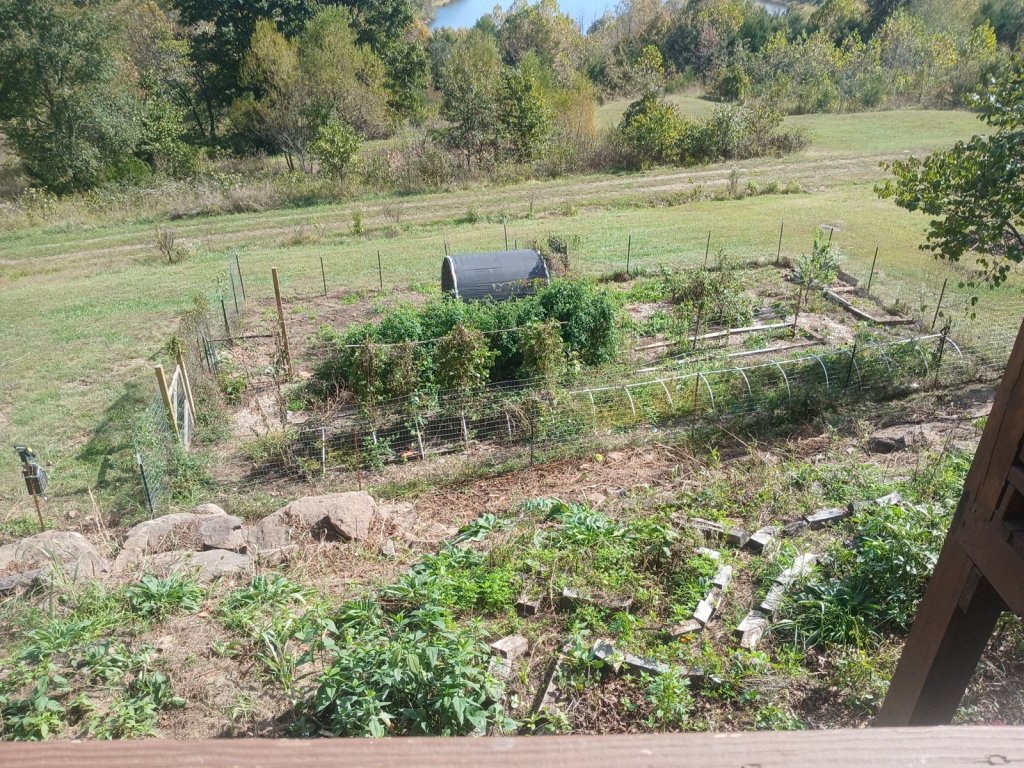
Gardens that feed us. Our gardens have given us a lot of good, organic food. Growing food here year after year has taught me more than any book.
Wood heat in the metal building. The metal building is insulated and has a wood stove. Robert, my former husband and a resident here, once lived out there through a cold Ozark winter, and it was quite bearable. It showed me how comfortable wood heat can be.
Dreams for the main house. I’ve often thought a wood stove in the main part of the log house would be a big step toward living off the grid, and could save a lot on electricity and propane. A wood cookstove would be even better, warming the house and cooking meals with the same fire. Since sunshine is shortest in December, wood heat and solar go together nicely through the winter.
Going off the grid can feel overwhelming. I’ve found it helps to start with what you have, take one step, and then the next.
See more of the land and the gardens at livingspringsloghouse.com.
This checklist is for general information. Rules and incentives change, so confirm details with your county, the Arkansas Department of Health, your electric cooperative, your insurance company, and licensed professionals before you build or install.
This article was written by Patricia Mikkelson, a resident of Living Springs Log House and friend of its owner, in collaboration with Claude.ai of Anthropic. Patricia brought her lived experience on this land; Claude helped with research and shaping the words.
Sources
- Off Grid Checklist: Become Self-Reliant with these Steps, Jacob Hunter, Primal Survivor
- Net Metering Policies in Arkansas for Solar Energy, University of Arkansas Cooperative Extension
- Arkansas to cut 1:1 solar net metering rate, pv magazine USA
- IRS FAQs on changes to residential energy credits
- Onsite Wastewater FAQs, Arkansas Department of Health
- Water Microbiology Laboratory, Arkansas Department of Health
- Protecting Water Supply Springs, NC State Extension
- Arkansas Peak Sun Hours, The Green Watt
- Wood Stove Regulations, Fire Pit Surplus
- Restored Wood Cook Stoves: The Pros and Cons, An Off Grid Life
- How to Live Off Grid in Arkansas, Texas Real Food


[…] more: Homesteading in the Ozarks, Living Off the Grid, Gently, An Off-Grid Living Checklist for the Arkansas Ozarks, and The Garden That Grew From a […]
LikeLike
[…] An Off-Grid Living Checklist for the Arkansas Ozarks […]
LikeLike