
In short: Replacing the log house’s aging heating and air systems would cost about $18,000. This article shows how much of the cooling the house, the land, and a few simple tools could do instead: night air, a whole-house fan, windows, screens, ceiling fans, and walls of green. The second half goes room by room.
Part 7 of the Living Springs Log House Improvement Checklist. These are suggestions, not professional advice. See the full note at the end.
The heating and air system at the log house is getting older. The estimate to replace both systems, in the upper house and the basement suite, is about $18,000. Before spending that, we’re asking a bigger question: how much of the cooling could the house, the land, and a few simple tools do on their own?
The back of the house stays cool. The front is another story. Sunshine pours into the dining room, the pantry gets hot, the upstairs deck gets very hot, the garage gets really hot, the grow room warms up from the water heater, and the basement suite has only one door, with a window on either side of it. Each of these needs its own plan.
A note about building codes. Out here in rural Madison County, there are few building codes. If you’re applying these ideas to a house in a town or city, check with your local building office before adding windows, finishing an attic, or doing electrical work.
Why Fresh Air Is Better
Living without air conditioning isn’t only about saving money. Many people find it’s better for them.
- Fresh air. Sealed, air-conditioned houses can trap indoor pollutants such as cooking fumes, dust, and chemicals from cleaners and furniture. Open windows bring in fresh air and carry those out.
- Easier on the body. Going back and forth all day between a cold air-conditioned room and hot summer air is a shock to the body. When people live closer to the outdoor temperature, their bodies adjust. Over a week or two of gradual exposure, the body learns to sweat sooner and handle heat better. This is called heat acclimatization.
- Living with the seasons. Cool mornings, breezy evenings, and the sounds of the woods through open windows become part of daily life.
A word of caution. Extreme heat is dangerous, especially for older adults, young children, and anyone with health conditions. Even a house cooled naturally needs one cool room for heat waves, plenty of water, and knowing the signs of heat exhaustion: heavy sweating, dizziness, nausea, headache, and weakness.
Letting the Downstairs Cool the Upstairs
Cool air sinks and warm air rises. That simple fact can turn the cooler lower part of a house into a source of cool air for the upper floors.
- Open low and high. Open windows on the lower floor, especially on the cool back side of the house, and open windows high on the upper floor. Warm air escapes upstairs and pulls cooler air up from below. This is called the stack effect, and it works even on a still night.
- Let the whole-house fan pull from below. With lower windows open and upper windows closed, the whole-house fan draws cool air in downstairs and moves it up through the whole house before sending it out through the attic.
- Open the inside paths. Keep interior doors and the stairway open so air can travel freely from floor to floor.
- The basement’s coolness. The basement stays cool because of the earth around it. Where the basement connects to the rooms above, that cool air can be drawn upward the same way. Basement air is often damp, though, so running a dehumidifier downstairs keeps the air that rises dry and comfortable.
The Whole-House Fan: How to Use It
A whole-house fan is mounted in the ceiling of the upper floor. It pulls warm air out of the house into the attic, and from there out the attic vents, while cool outside air flows in through open windows. Used well, it can cool a house in minutes.
- Run it when it’s cooler outside than inside. Usually that means evening, night, and early morning.
- Always open windows first. Never run it with the windows closed. It needs a path for air to come in, and without one it can pull exhaust gases back down a chimney or flue.
- Choose which rooms to cool. Open windows only in the rooms you want to cool, such as the bedrooms at night. The fan pulls air through those rooms first.
- Close up in the morning. When the outdoor air starts to warm, turn off the fan, close the windows, and pull the blinds on the sunny side. The house holds the night’s coolness for much of the day.
- The attic needs enough vents. All that air has to leave the attic somewhere. Fan makers list how much attic vent area each fan needs.
- Cover it in winter. An insulated cover over the fan keeps heat from escaping in cold weather.
A whole-house fan typically costs about $900 to $2,600 installed, around $1,700 on average. Running it only at night costs roughly 16 to 88 cents a day, compared with about $4 to $21 a day to run central air.
Using the Double-Hung Windows and the Back Door
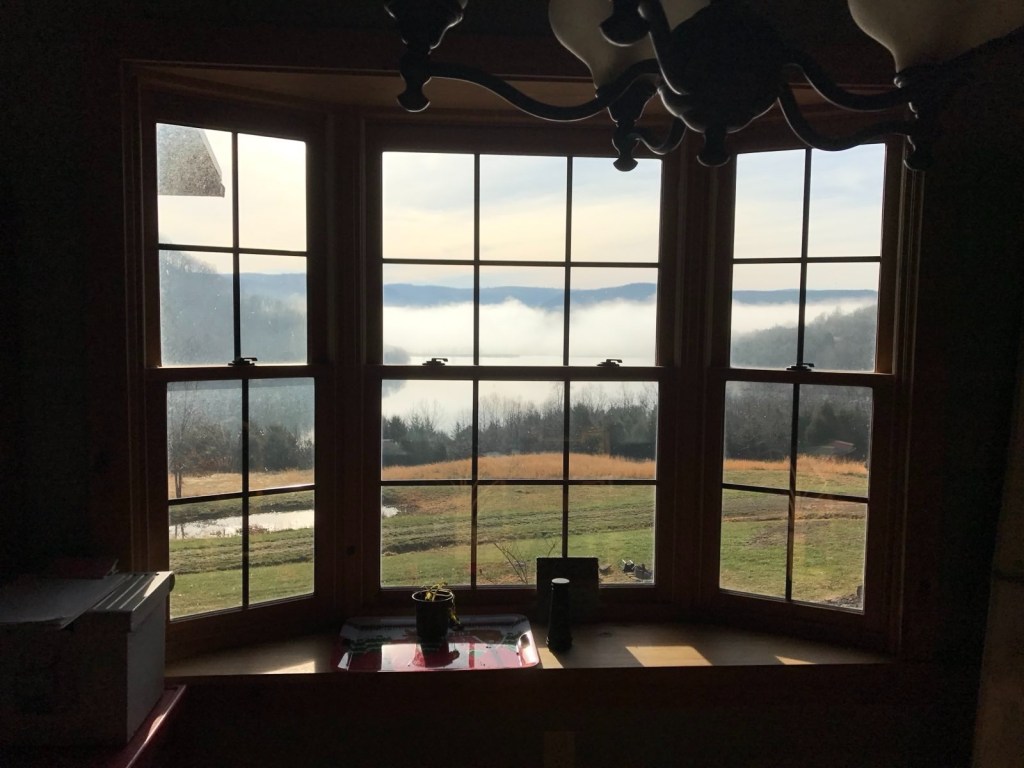
Double-hung windows open from the top and the bottom, and that’s a gift for natural cooling.
- Open both the top and the bottom. Warm air rises and slips out the top opening while cooler air comes in at the bottom. Even one window opened this way moves air.
- Pull cool air from the back of the house. Since the back stays cool, open the lower sashes on back windows to bring that air in, and open the upper sashes on the sunny front side to let warm air out. Air will flow through the house from the cool side to the warm side.
- Open the living room door to the back patio. Opening it in the evening, with a screen door in place, lets the cool air from the back flow into the heart of the house.
- Open high on the upper floor. Hot air gathers upstairs. Opening the top sashes of upstairs windows lets it escape.
Screens on Every Window and Door
Natural cooling only works if windows and doors can stay open without letting in insects.
- Check every window. Five screens are missing, and some others are damaged. Replacing them is usually inexpensive. Many hardware stores make custom screens, or a frame can be re-screened by hand with a simple kit.
- Add screen doors. A screen door on each outside door, including the living room door to the back patio and the basement suite door, lets the doors stay open for a breeze. A sturdy security screen door adds peace of mind.
Ceiling Fans in the Living Room and Every Bedroom
Moving air makes a room feel several degrees cooler, even when the temperature hasn’t changed. Ceiling fans in the living room and each bedroom use very little electricity. In summer, set them to spin counterclockwise to push air down. In winter, reverse them to clockwise on low to gently bring warm air down from the ceiling.
Walls of Green: Vines on the Deck and the Basement Patio
Plants grown up a trellis or wire make a living wall of shade. The leaves block the sun before it reaches the wood and the windows, and as plants release moisture through their leaves, they cool the air around them.
- The upstairs deck. The upper deck gets very hot. Vines grown all along its railing would shade the deck and the rooms behind it. Some of the view would be hidden in summer, but on the hottest side of the house, cooling may matter more. A gap can be left at a favorite spot to keep a window onto the view.
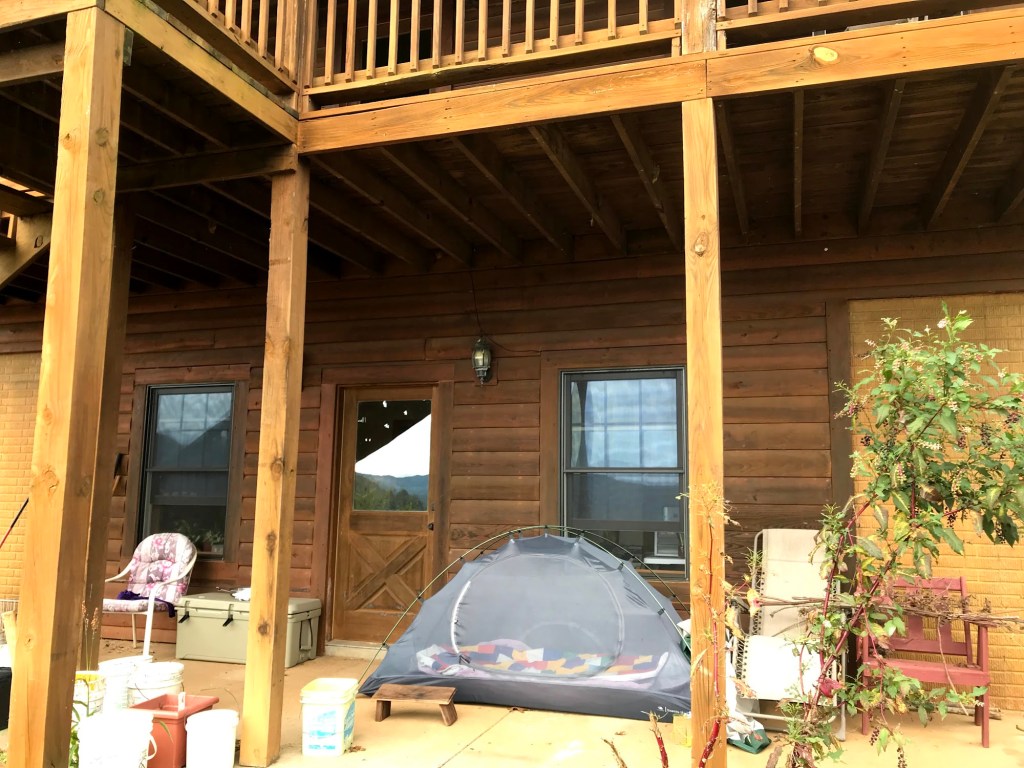
- The basement patio. The patio in front of the basement suite sits under the upper deck, which already shades it from above. Plants growing up along the outer edge of the patio would add a green wall from the side, shading the suite’s door and windows and cooling the air before it drifts inside.
- Choose plants that drop their leaves. Vines that are leafy in summer and bare in winter give shade when it’s needed and let the winter sun back in.
- Some vines to consider. Native vines such as crossvine, coral honeysuckle (also called trumpet honeysuckle), and maypop passionflower grow well in the Ozarks and feed hummingbirds and pollinators. Food vines such as grapes, hops, pole beans, and gourds give shade and a harvest. Annual vines fill in quickly the first summer while slower vines get established.
- Vines to avoid. Japanese honeysuckle, English ivy, Chinese and Japanese wisteria, and kudzu spread aggressively and are very hard to get rid of.
- Keep vines off the siding. Grow vines on wire, cattle panels, or a trellis set a few inches out from the house, not directly on the wood siding, so air can move and the wood can dry out after rain.
- Water. Large pots or a planting bed along the edge, with drip watering or a rain barrel nearby, keep the vines growing through dry spells.
The Sunny Front and the Dining Room
The front of the house, and especially the dining room, gets strong sun. The key is to stop the sun before it reaches the glass.
- Outside shades and awnings. Awnings, outdoor roller shades, or solar screens (a dark mesh that blocks much of the sun’s heat while you can still see out) work far better than indoor curtains.
- Living shade. A trellis with vines, or deciduous trees on the sunny side, shade the windows in summer and let the winter sun in after their leaves drop.
- Light-colored curtains. Inside, light-colored or lined curtains help reflect heat back out.
What Doesn’t Work Well Here
Swamp coolers and hanging wet cloths cool by adding moisture, which makes a humid Ozark day feel even stickier. Earth tubes, which bring in air through buried pipes, can collect condensation and grow mold in a damp climate unless they’re carefully designed with a slope and a drain.
Continue Reading
The second half covers the pantry, the garage, the grow room, the basement suite, laundry, cooking, and what it all costs: Staying Cool Without Air Conditioning, Room by Room.
A Few Insights
- The cool night air is free. Open up at night and close up by day.
- Cool air sinks and warm air rises, so the cooler downstairs can feed cool air to the upstairs.
- Stop the sun before it reaches the glass, the deck, or the garage door.
- A wall of vines can trade a little summer view for a lot of cool shade.
- Living closer to the outdoor temperature, with fresh air, can be easier on the body than going back and forth between extremes.
Related articles
- Staying Cool Without Air Conditioning, Room by Room: The Living Springs Log House Improvement Checklist, Part 8
- From Bat Roost to Bright Room, Part 2: Turning the Attic Into Living Space
- Rocket Stoves Beyond the House: The Living Springs Log House Improvement Checklist, Part 5
- Rocket Stoves, Clean Fire for a Self-Reliant Life: The Living Springs Log House Improvement Checklist, Part 4
A note on these suggestions: The repairs and improvements described here are our best understanding from research and our own experience living on the property. We are not contractors, engineers, or licensed inspectors, and these may not be the best or only solutions. Before starting any repair or project, please consult a qualified professional, such as a contractor, drainage specialist, or home inspector, who can look at the site in person.
How we wrote this together: This article was written together by Patricia Mikkelson, a resident of the Living Springs Log House, and Claude.ai, an AI assistant made by Anthropic. Patricia brought the question of cooling the log house naturally and her knowledge of the house: the cool back, the sunny dining room, the hot upstairs deck, the pantry, the garage, the grow room, the basement suite, the living room door to the back patio, the missing screens, the value of clotheslines and of washing less, the idea of growing vines along the deck and patio, and the dream of a screened-in outdoor kitchen. Claude researched natural cooling methods and costs and shaped the ideas into an article. The illustration was created with AI.
The Living Springs Log House Improvement Checklist
- Part 1: Catching the Rain
- Part 2: From Cedar Thicket to Sanctuary Pasture
- Part 3: Water and Shelter for a Sanctuary Pasture
- Part 4: Rocket Stoves for Heat and Cooking
- Part 5: Rocket Stoves Beyond the House
- Part 6: Re-Screwing the Metal Roof, Safely
- Part 7: Staying Cool Without Air Conditioning (this article)
- Part 8: Staying Cool, Room by Room
- Part 9: Caring for the Cypress Siding
- Part 10: Forest Mulching
- Part 11: Small Gaps, Honest Fixes
- Part 12: A Quieter Log House: Soundproofing
To see more of the log house and the land, visit www.livingspringsloghouse.com


[…] Part 5: Staying Cool Without Air Conditioning […]
LikeLike
[…] Part 5: Staying Cool Without Air Conditioning […]
LikeLike
[…] Part 5: Staying Cool Without Air Conditioning […]
LikeLike
[…] Part 5: Staying Cool Without Air Conditioning […]
LikeLike
[…] Part 5: Staying Cool Without Air Conditioning […]
LikeLike
[…] Part 5: Staying Cool Without Air Conditioning […]
LikeLike
[…] Part 5: Staying Cool Without Air Conditioning […]
LikeLike
[…] then covers laundry, cooking, the attic, and what it all costs compared to a new system. Start with the first half for whole-house […]
LikeLike
[…] rocket stove takes care of heat, not cooling. Our article Staying Cool Without Air Conditioning covers screened windows, shade, a whole-house fan, and opening the house to cool night air. […]
LikeLike
[…] Replacing both was estimated at about $18,000. We’ve written about lower-cost alternatives in Staying Cool Without Air Conditioning and Rocket […]
LikeLike
[…] house fan. Read more: Staying Cool Without Air Conditioning and Staying Cool, Room by […]
LikeLike
[…] Part 7: Staying Cool Without Air Conditioning […]
LikeLike
[…] Part 7: Staying Cool Without Air Conditioning […]
LikeLike
[…] Staying Cool Without Air Conditioning: The Living Springs Log House Improvement Checklist, Part 7 […]
LikeLike
[…] Staying Cool Without Air Conditioning: The Living Springs Log House Improvement Checklist, Part 7 […]
LikeLike