In short: Hugelkultur is a way of building raised garden beds on top of logs, branches, and other organic materials.. As the wood slowly rots, it holds water like a sponge and feeds the soil for years. I used hugelkultur, and my own adaptations of it, to build many of the gardens at the Living Springs Log House, including the vegetable garden. Here’s where it comes from, why it works, and how to build your own.
What Is Hugelkultur?
Hugelkultur (say HOO-gul-kul-TOOR) is German for “hill culture” or “mound culture.” Instead of hauling away fallen logs, branches, and leaves, you pile them up, cover them with soil and compost, and plant right on top. Underneath, the wood slowly breaks down over many years, turning into rich, spongy soil full of worms and fungi.
It’s really a copy of what happens on any forest floor. A fallen tree soaks up rain, rots slowly, and becomes a nursery for new life. Hugelkultur simply brings that process into the garden.
A Little History
People in parts of Europe have buried woody debris in garden mounds for a long time, but the name itself first appeared in print in 1962, in a German gardening booklet by Hermann Andrä. He promoted “mound culture” as a better way than flat gardening, and as a way to use woody debris without burning it. Later editions were revised with fellow gardener Hans Beba.
The Austrian farmer Sepp Holzer, famous for growing food high in the Alps, adopted and developed the method on his own land. In recent years, permaculture teachers such as Paul Wheaton in the United States have spread it widely, and today hugelkultur beds show up in backyards and homesteads all over the world.
Where Permaculture Comes In
Permaculture is a way of designing gardens and homes that works with nature instead of against it. Its ideas include using what you already have, turning “waste” into a resource, catching and storing water, and building soil rather than depleting it. Hugelkultur fits every one of those ideas. Fallen branches that might have been burned become the foundation of a garden. The buried wood stores rainwater. And the soil gets richer every year instead of poorer.
Why It Works
- It holds water. Rotting wood acts like a sponge, soaking up rain and releasing it slowly to plant roots. Established beds often need little or no watering.
- It feeds the soil for years. As the wood breaks down, it releases nutrients gradually, while worms, fungi, and other soil life move in.
- It uses what’s on hand. Logs, branches, leaves, and grass clippings that would otherwise be wasted become the garden itself.
- It’s a raised bed without the lumber. The mounds warm up early in spring, drain well, and are easier on the back.
To be fair, most of these benefits come from the experience of gardeners rather than formal research. I can only tell you what I’ve seen in my own beds.
How to Build a Hugelkultur Bed
- Choose your spot. A sunny place is best for vegetables. On a slope, run the bed across the hill so it catches water as it flows down.
- Smother the grass. Lay cardboard right over the grass or weeds. You can also dig a shallow trench and set the wood partly into the ground.
- Lay the big wood first. Put the largest logs on the bottom, then smaller branches and twigs on top, filling the gaps as you go.
- Soak it. Water the wood well. Dry wood takes a long time to absorb moisture.
- Add the “greens.” Pile on leaves, grass clippings, garden scraps, and compost. These nitrogen-rich layers help balance the wood, which can tie up nitrogen in the first year or two as it starts to break down.
- Top with soil and mulch. Cover everything with several inches of soil, then a layer of mulch such as straw, leaves, or wood chips.
- Plant! Squash, beans, tomatoes, and herbs often do well in a new bed. The bed will settle and get better every year.
Which Wood to Use
Good choices include maple, oak, poplar, cottonwood, birch, alder, and fruit tree wood. Older, already-rotting wood works best of all, because it soaks up water and breaks down faster. Avoid black walnut, which releases a substance that stunts many plants. Very rot-resistant woods like cedar and black locust break down so slowly that they add little. And never use treated or painted lumber.
Hugelkultur at the Living Springs Log House
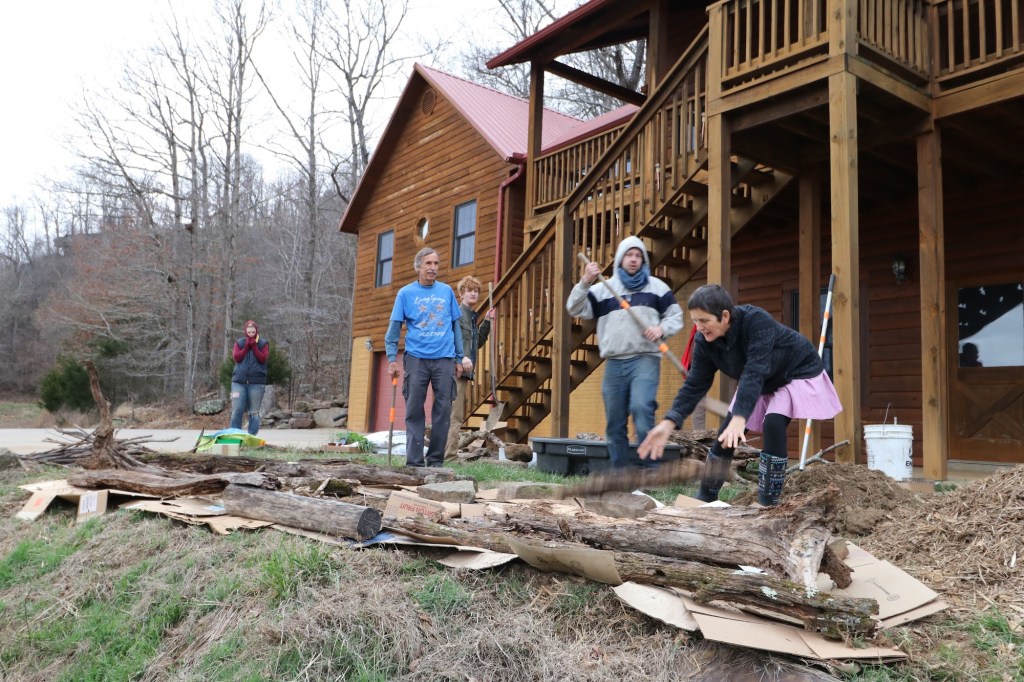
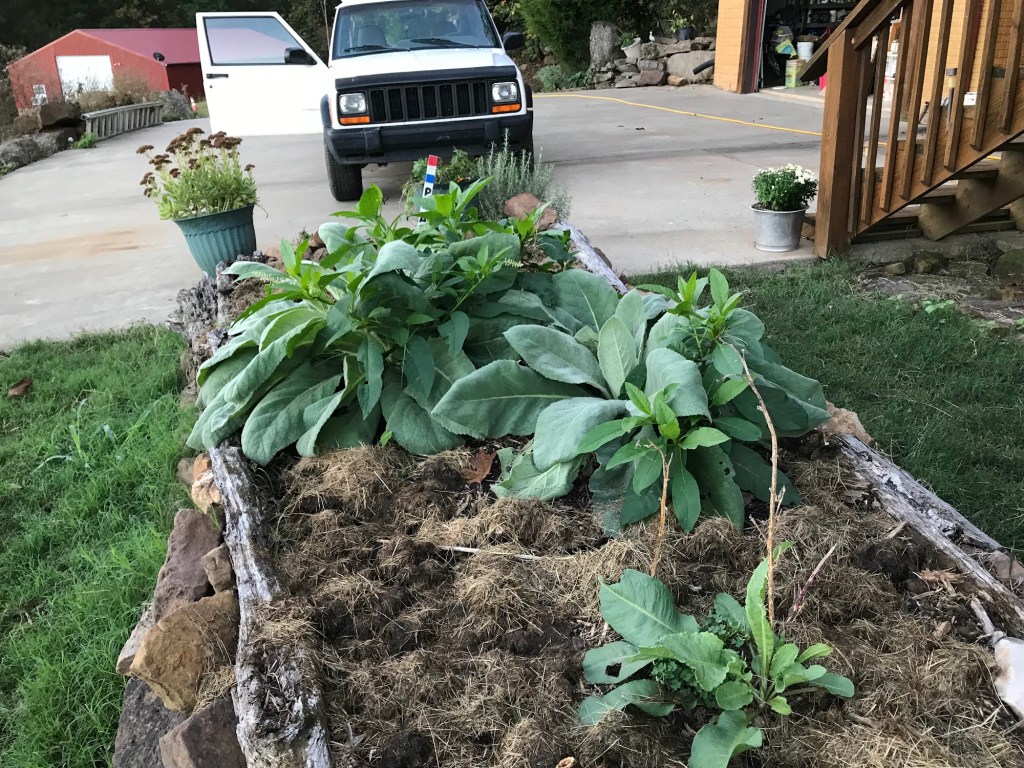
I used hugelkultur, and adaptations of it, to make a lot of the gardens here: the beds right around the log house, the gardens up top in front of the basement suite, and the vegetable garden. It started with our very first work party in 2017, when friends helped lay logs and cardboard right over the Bermuda grass. Sometimes I built classic mounds, sometimes I buried wood in trenches, and sometimes I simply layered branches, cardboard, and mulch wherever a new bed was needed. I’ve even made large hugelkultur pots for herbs and greens that need a little extra care.
Years later, those beds are still feeding the garden, and the new owners will inherit soil that has been quietly building itself up the whole time.
Read more about the gardens: The Garden That Grew From a Trench, The Spectacular Permaculture, Wild Edible, Pollinator, Native Gardens, and Comfrey: The Plant I Planted Once and Never Had to Plant Again.
For More Ideas
- Hugelkultur: How to Build the Ultimate Raised Bed – Farmers’ Almanac
- How to Build a Hugelkultur Garden Bed – Southern Exposure Seed Exchange
- How to Make Hugelkultur Raised Beds – Grit
- Hugelkultur – Maine Organic Farmers and Gardeners
- Hügelkultur – Wikipedia (history)
This article was written collaboratively by Patricia and Claude, an AI assistant made by Anthropic. Patricia shared how she has used hugelkultur in the gardens at the Living Springs Log House, and Claude researched its history and methods.


[…] more: Comfrey: The Plant I Planted Once and Never Had to Plant Again, Hugelkultur: Building Garden Beds From Logs, Leaves, and Time, Caring for a Steep Hillside Behind Your House, and The Spectacular Permaculture, Wild Edible, […]
LikeLike
[…] similar gardens are in development around the property. Read more: Permaculture Zone Map, Hugelkultur, and Building a […]
LikeLike
[…] Hugelkultur: Building Garden Beds From Logs, Leaves, and Time […]
LikeLike