First of all, if you are visiting here in the fall, the gardens don’t look so spectacular! And there is a lot of weeding that needs to be done — and cutting back of vines and blackberry bushes. But I am working on it! And whoever comes next — I pray they will love tending this place as I have loved doing it.
When I first looked out at what would become the gardens around this log house, I wasn’t looking at soil full of promise. I was looking at Bermuda grass — thick, stubborn, monoculture Bermuda grass, the kind that chokes out everything else and provides nothing but a lawn that is fairly easy to keep nice looking. But lawns are not my style.
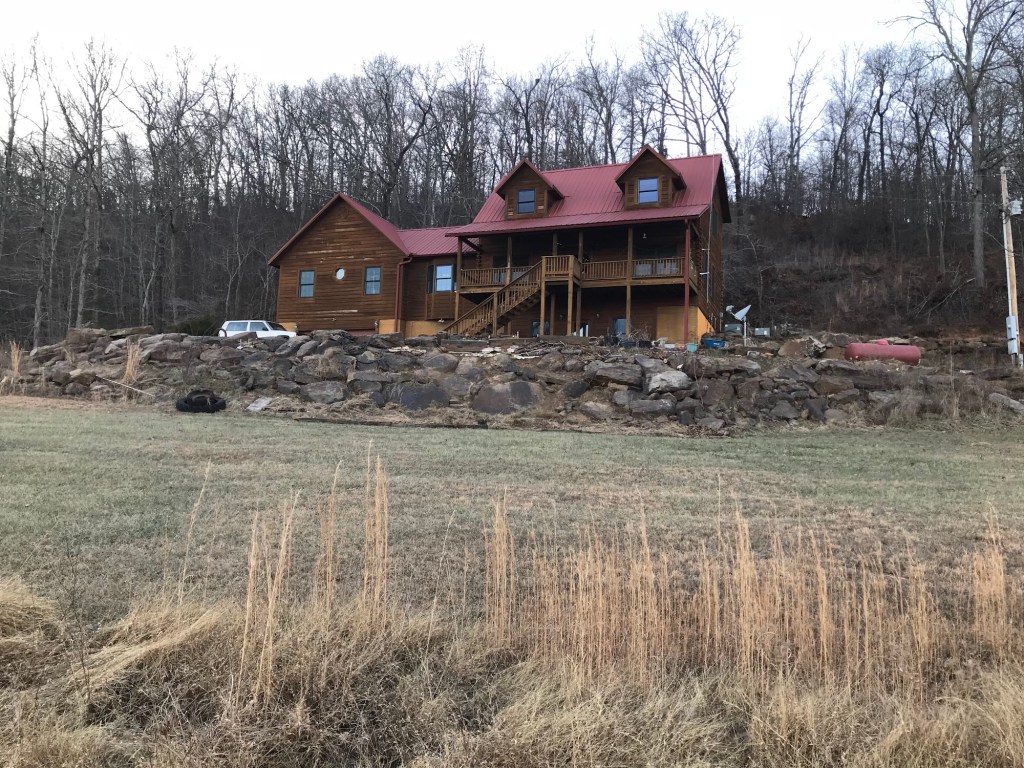
Nine years later, that same ground around the house is home to nearly forty different plants. Medicinal herbs. Wild edibles. Butterfly magnets. Heirloom flowers that come back every single year without me lifting more than a finger. Jerusalem artichokes I can harvest without ever having dug a row. And I didn’t get here by fighting the grass, spraying it, or tilling it under in some grand overhaul. I got here slowly — a start here, a seed there, a root division from a friend, a volunteer plant that showed up on its own and I decided to let it stay.
I think of it now as an unfolding, the way a piece of ground remembers what it was always meant to be, once you stop insisting it be only one thing.
How I Actually Did This
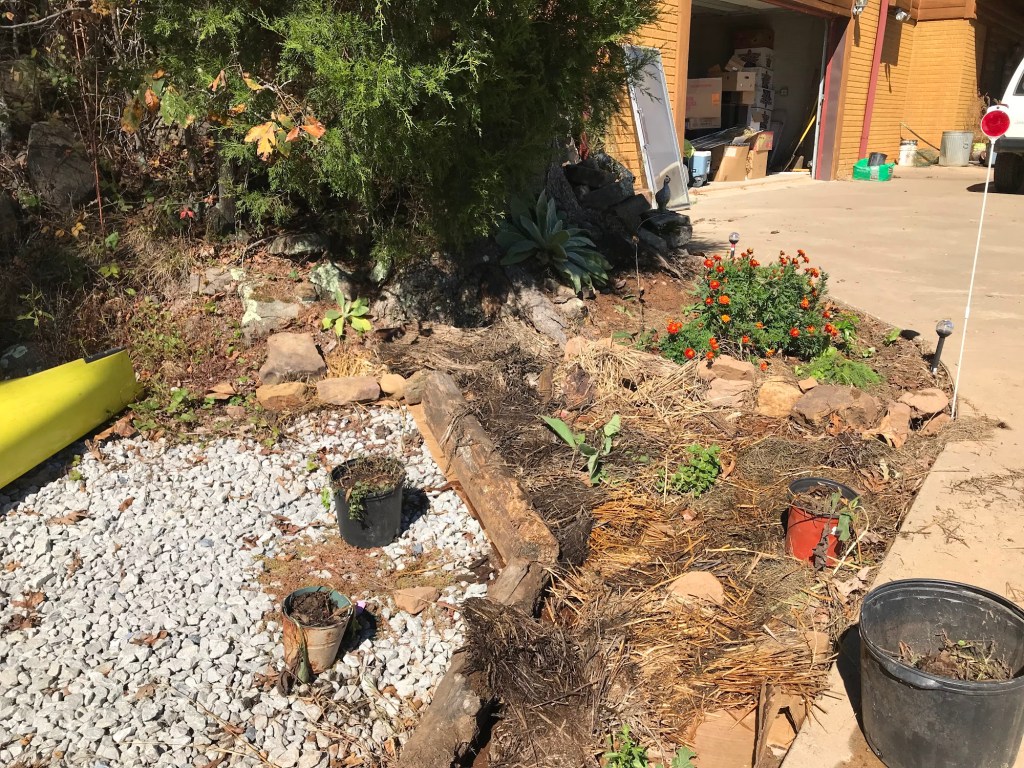
There was no grand plan, but there was a method, and it’s a simple one: cardboard, laid thick enough with mulch on top, is what actually kills Bermuda grass. Once a bed is established, what I keep doing every year is mulching: leaves, pine needles, whatever organic matter I can get my hands on. No tilling, no sprays of any kind — not even organic ones. Just smothering the grass into surrender once, and feeding the soil underneath ever since.
As the beds took shape, I also did some soil protection work near the boulder cascade, which keeps the level ground the log house sits on from sliding down the hill. I kept taking small measures to keep the soil from washing down into the boulders rather than staying put in the beds. Every year since, I mulch again, and every year I do some trimming back. I laid a stone walkway that winds through the front of the basement suite — one of those projects that took a few days, and continuous nurturing. That step quietly changed how the whole space has felt ever since.
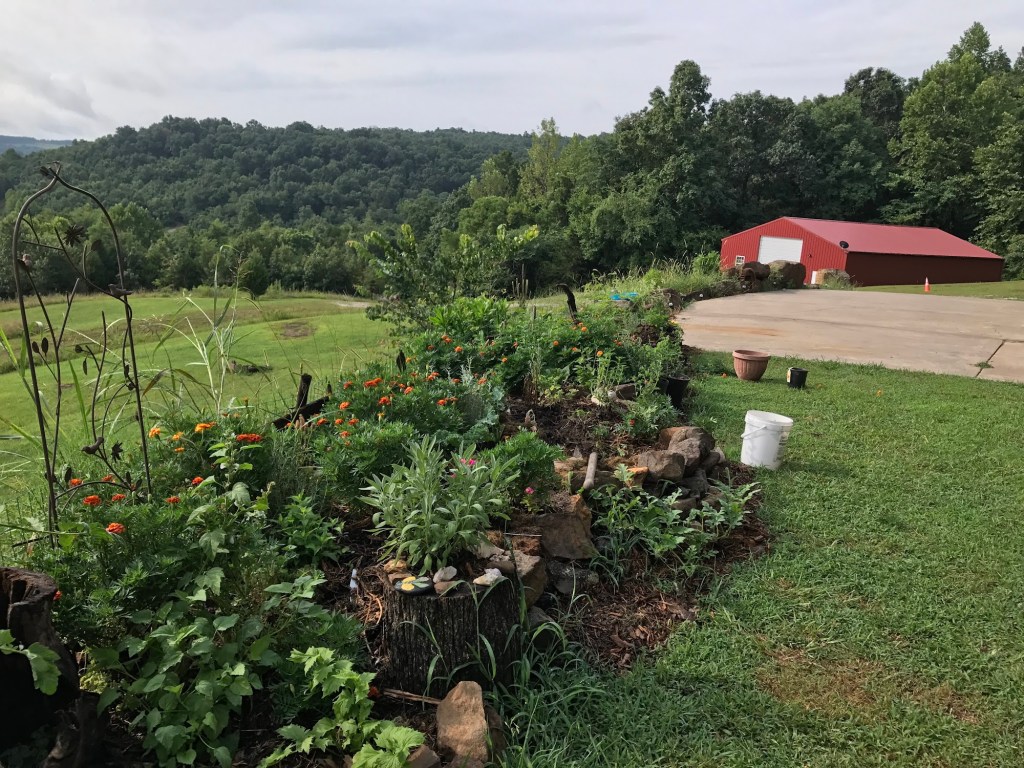
It isn’t zero-maintenance. The paths especially need tending, and trimming back is a regular rhythm. But it’s easy maintenance — nothing like the demands of a row garden or a traditional lawn. Watering is rarely part of it, either. Most of what’s out here has settled in enough to be drought-proof; I only reach for the hose if something in the ground looks visibly wilty, and the hugelkultur pots are the one thing that reliably need it, since containers dry out faster than open ground. And every year I still throw out seed just to see what happens. Half the joy of this place is the surprises that come up from a handful of seed tossed out on a whim.
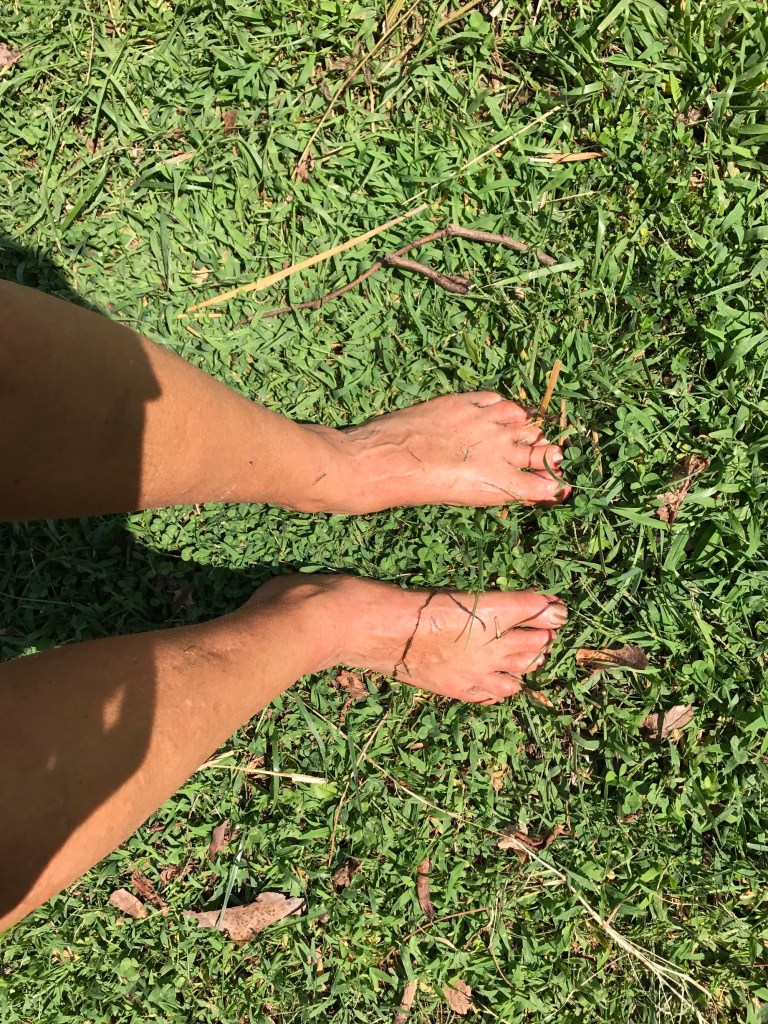
There’s a therapeutic quality to the trimming itself. I go out barefoot, feet on the ground, and the swallows keep me company while I work, along with my dog, India. It’s one of the most grounding things I do, in the truest sense of the word.
The grandchildren loved it too when they lived here along with my son and daughter-in-law for six months. They came out to help me pick the wild greens, and over time they learned the names of many of them on their own — dandelion, chickweed, purslane, wood sorrel — and they genuinely enjoy eating what they find. Watching them reach for a plant they can name, that they know is good and safe and theirs to gather, is one of the quiet rewards of all this.
A lot of what’s growing here isn’t originally mine, either. So many people have given me starts over the years. The daylilies, for instance, came from an eighty-year-old friend, who brought the original stock from her father’s farm in Kentucky. Every time they bloom, I think of her. Others I found at farmers markets and the master gardeners’ sale — small purchases that turned into years of return. Many friends shared seeds and starts. And I have shared much in return. This garden owes a debt to a lot of generous hands, not just my own.
This year I tried something new: vertical vegetable gardening. I wanted more vegetables in the mix, not just herbs, pollinators, wild edibles, native plants and flowers, so I put up supports and set cow peas to climbing, and coaxed the passion fruit vine upward along with them. Okra has taken off too, with no need to climb. It’s the first time I’ve grown food this way here, and watching the garden start to use its height instead of just its footprint has been one of the year’s small delights.
Not everything wants to be managed, though. The morning glories are the one plant in this whole garden that tests my patience — left alone, they’ll happily climb over and smother anything nearby. They’re beautiful, and I keep them, but they’re the one thing I have to actively hold back rather than just tend.
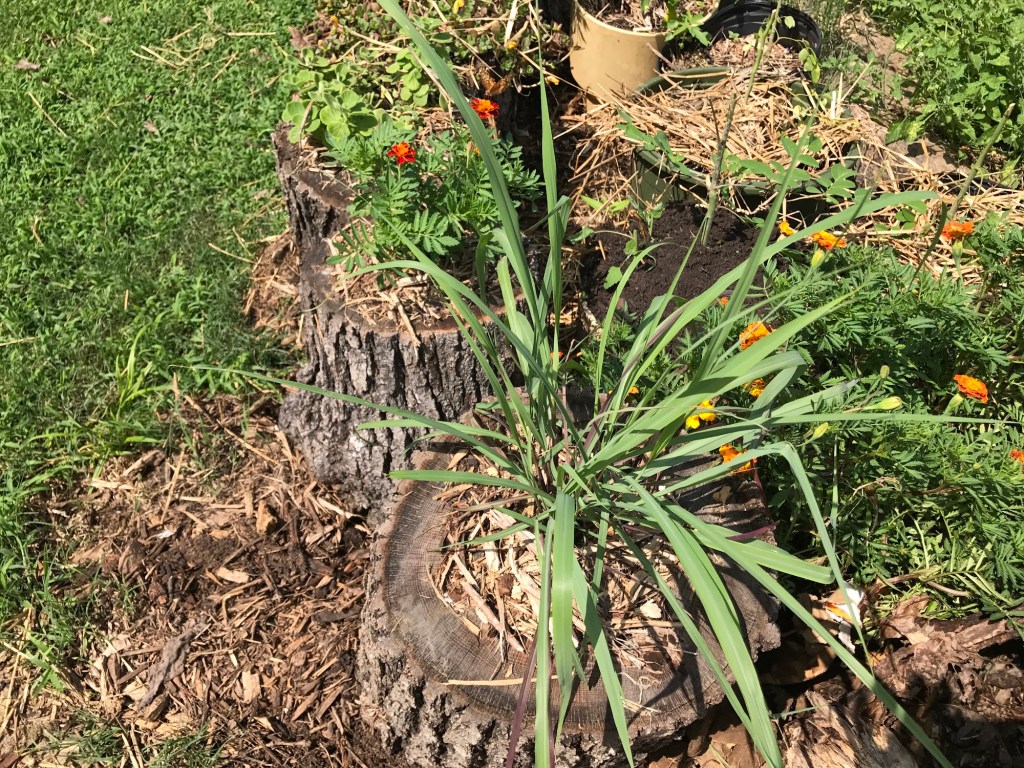
Alongside all this self-sufficient growth, I also keep large hugelkultur pots — a different approach for a different purpose. These are for the plants that need a bit more individual attention and would otherwise get lost in the fray of the wider garden: thyme, basil, peppers, more oregano, and longevity spinach, which has become one of my favorite discoveries — a truly remarkable plant, both for how easily it grows in a container and for what it offers nutritionally. The pots let me give these few plants closer care without asking the same of the whole garden.
What Actually Grows Here Now
The healers. Bee balm, yarrow, echinacea, comfrey, peppermint, apple mint, oregano, mullein, tansy — these came in slowly, a plant or two a season, and now they hold their own ground against the Bermuda with mulching and minimal watering. Yarrow and echinacea are native to this region, so they were never really strangers here; they were just waiting for an invitation. Comfrey I planted once and have never had to plant again — it comes back thicker every spring, and I use it to feed the soil as well as nurture the bees who love the flowers.
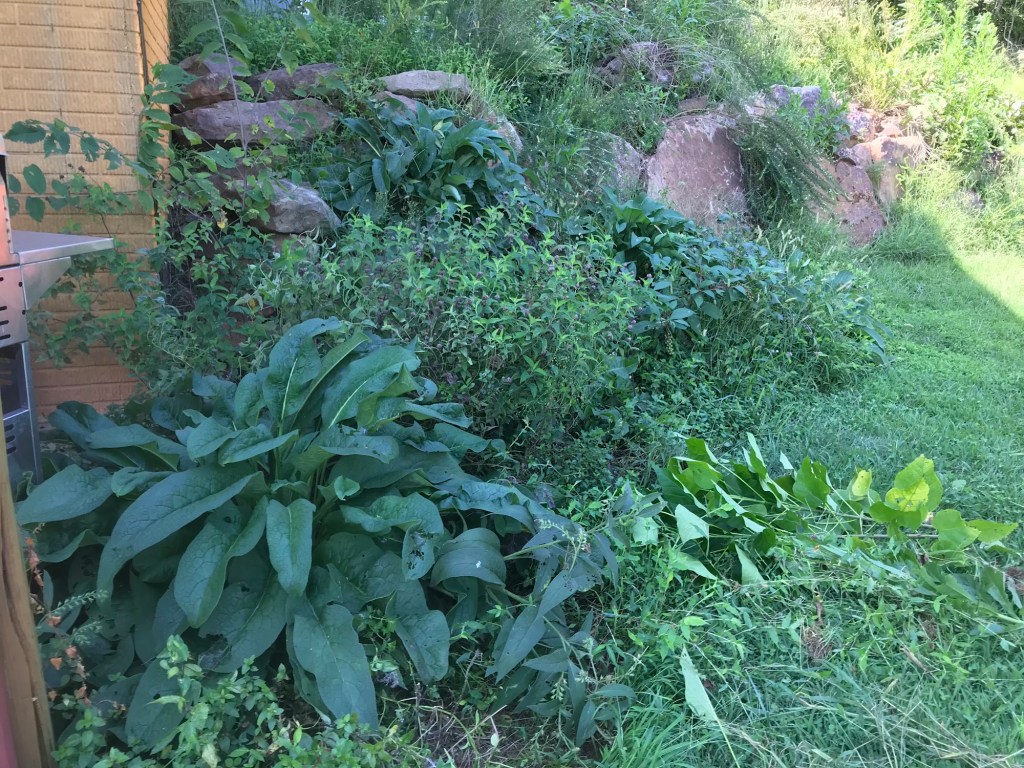
The volunteers I learned to welcome. Dandelion, plantain, chickweed, dead nettle, yellow dock, wintercress, purslane, Queen Anne’s lace, and wood sorrel — these showed up on their own, the way “weeds” do, and I made a decision a long time ago not to treat them as enemies. Nearly every one of them is edible, and several are quietly powerful medicine. Purslane alone is one of the most nutrient-dense greens you can grow, and it grows itself, in cracks and disturbed soil, without being asked. Wood sorrel has a bright, lemony bite that the grandchildren love to sample straight off the plant, and Queen Anne’s lace nods along the path edges all summer, delicate as lace and just as unbothered by the ground it grows from.
And there are still more out there I haven’t fully identified yet — nearly everything that’s shown up on its own has turned out to be edible, which says something about what this ground wants to grow.
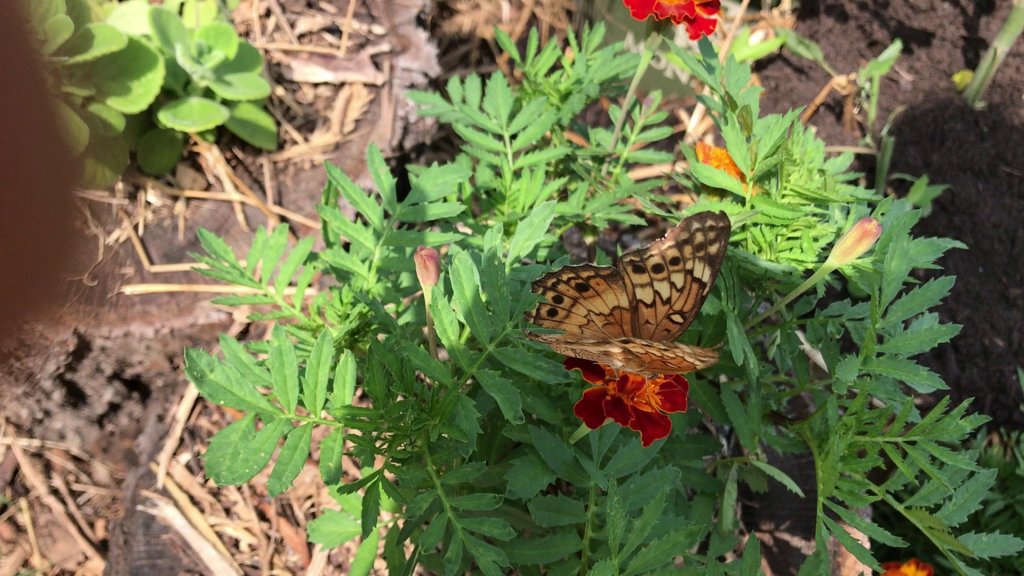
The pollinator magnets. Milkweed, butterfly bush, sedum, marigolds, zinnias, sweet peas, cosmos, passion fruit vine — this stretch of the garden hums in summer. Milkweed is the one I’m proudest of. It’s native, it’s medicinal in the right hands, and it’s the host plant monarch caterpillars depend on. Monarchs don’t return in the numbers they once did — some years I see them, some years I don’t, and that absence says more about the wider world than it does about this garden. But the bees are here reliably, working the bee balm and the echinacea and the sedum in that unhurried way bees have. So are the butterflies and moths drifting in and out of the marigolds and cosmos, small ones I can never quite identify moving low along the purslane and clover.
It’s a real joy to watch, and it feels like more than that too. With so much habitat disappearing everywhere else, I think of this ground as a haven — one small, deliberate patch of the world still saying yes to the creatures that need it. And the grandchildren felt it too, in their own way — there’s nothing that got them more excited than spotting a butterfly, or a bee working a flower, or really any bug at all. Their delight is uncomplicated, and it’s a good reminder of why this all matters.
“The butterflies used to be so prolific, along with many other insects. I feel sad, because I wonder what is happening. We had very few butterflies and bees this year. How I long to see them be prolific again.”
The heirlooms and the flowering ones just because they’re beautiful. Gladiolas, iris, daylilies, Asian lilies, naked lady lilies, obedient plants, four o’clocks, morning glories — all came as gifts from people who had way too many of these generous plants. Once established, they don’t ask much. They come up according to their own calendar, bloom, fade back, and trust the ground to hold them until next year.
Even the trees volunteered. A sycamore and a redbud came up on their own in front of the house, and now they give real shade where there used to be none — something I never planted, just allowed. It’s a good measure of how long this has all been unfolding — a tree that started as a volunteer seedling is now providing shade.
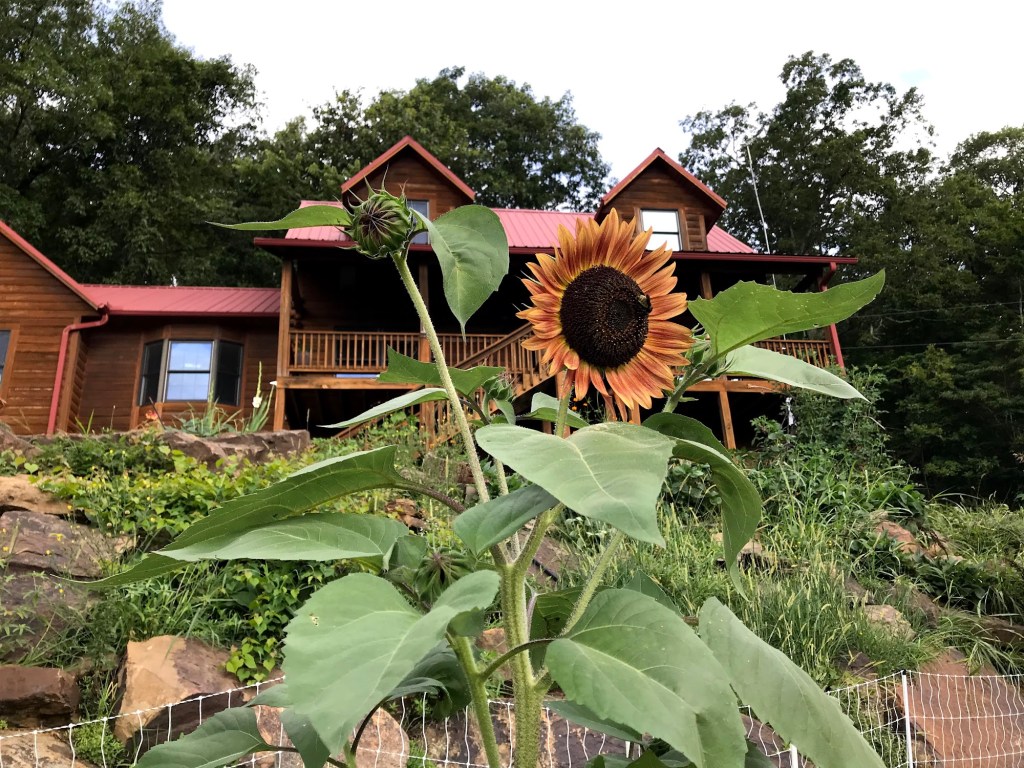
The ones that feed you from below. Jerusalem artichokes are the standout here — tall, sunflower-like, and beneath the soil a tuber that stores itself for winter without a root cellar. Yellow dock and dandelion offer roots too, if you’re willing to dig.
What This Really Is
What’s growing around this house now isn’t a garden in the way most people mean the word — rows, beds, a plan. It’s closer to succession. Bermuda grass was the beginning, not the end, and every plant that has taken hold since then has out-competed it in its own way: some by shading it out, some by out-rooting it, some simply by being so useful and so beautiful that I gave them more of my attention than I gave the grass. But the grass had to be killed initially with the cardboard and mulch routine.
There’s something in me that reads this as more than horticulture. I think about Eden — not as a myth, but as a pattern: ground given over to abundance rather than scarcity, diversity rather than monoculture, things planted once and trusted to keep giving. That’s what this ground has become. Not through force. Through patience, and through letting the land show me what it wanted to be. That is also akin to permaculture. I am not a certified practitioner, but I love the principles, and I have learned as much as I can about this great philosophy ever since I stumbled upon it 26 years ago.
For Whoever Comes Next
If you’re the kind of person who dreams of a working garden that asks little of you — medicine growing alongside your morning coffee, pollinators doing their quiet work all summer, roots you can dig in the winter when you need them, flowers that return without replanting, some paths already established — this ground is already doing that. A little mulch, a little trimming, a handful of seed tossed out each spring to see what surprises come — that’s the whole of it. You wouldn’t be starting from Bermuda grass. You’d be starting from here.
I won’t pretend leaving this place will be easy. What I hope for, and what I pray for, is that the right people find it — people who will truly enjoy what’s here, who will cherish it and value it the way it deserves. What I’ve built into this ground over these years isn’t something a price tag can capture. It’s value of a different kind entirely.
You could buy raw land almost anywhere. What you can’t buy is time. This ground already has nine years of it, patiently given, and it’s yours the moment you step onto it.
I have cultivated gardens like this all around the property. You will see them if you come on a tour. A 40 x 55 foot organic garden, completely fenced, with a chicken yard integrated into a corner, supplies all the tomatoes and green beans I need right now in late summer. It has provided so much food over the years, including in the winter, when we installed a low-tunnel greenhouse made with PVC pipe. I am even leaving some plastic to go over the hoops, which are still strong, if you want to have a winter or early spring garden. Hugelkultur has been the basis of establishing the beds, and there is some space needing attention that does not have raised beds — and you can be as creative as you like.
There are two pear trees and an apple tree growing as well. They are struggling, because they were neglected for years due to circumstances beyond our control, and also because they are so far away from the house. Poor planning by some people who I thought knew what they were doing. Live and learn! But with love, care, and pruning, they could become thriving fruit trees.
I love this land, and in the springtime, when the flowers are in full bloom, the garden is truly spectacular. There are flowers blooming from early spring until killing frost in October. But when the garden is at its height, how truly amazing and wonderful its thriving is — close to the Garden of Eden as I imagine it to be.
A note on how this was written: this piece came together in conversation with Claude, Anthropic’s AI, over several sittings — I’d share a memory or a detail I’d forgotten, and we’d shape it into the story together. It was a genuine pleasure to help carry this one into words. There’s something fitting about a piece celebrating patient, collaborative growth being written the same way — a little added each time, nothing forced, until it became whole.


[…] The Land: https://livingspringsloghouse.com/2026/08/24/the-spectacular-permaculture-wild-edible-pollinator-nat… […]
LikeLike
[…] I covered as much of the Bermuda grass as I could with cardboard and mulch, using a mattock to dig out rocks big and small. You can read more in this article. […]
LikeLike
[…] more about the gardens: The Spectacular Permaculture, Wild Edible, Pollinator, Native Gardens, Medicinal and Other Plants Come Up Every Year, and The Garden That Grew From a […]
LikeLike
[…] more about the gardens: The Garden That Grew From a Trench, The Spectacular Permaculture, Wild Edible, Pollinator, Native Gardens, and Comfrey: The Plant I Planted Once and Never Had to Plant […]
LikeLike
[…] Read more: Comfrey: The Plant I Planted Once and Never Had to Plant Again, Hugelkultur: Building Garden Beds From Logs, Leaves, and Time, Caring for a Steep Hillside Behind Your House, and The Spectacular Permaculture, Wild Edible, Pollinator, Native Gardens. […]
LikeLike
[…] and ready for whatever comes next. The walk-out basement suite has its own separate entrance. The gardens have been tended for years, and they are waiting for new hands. And for the past 3 summers, the […]
LikeLike
[…] and pollinator plantings established near the house, many perennial or self-seeding. Read more: The Spectacular Permaculture, Wild Edible, Pollinator, Native Gardens, Medicinal and Other Plants Come Up Every Year, Comfrey: The Plant I Planted Once, and From Rock […]
LikeLike
[…] The Spectacular Permaculture, Wild Edible, Pollinator, Native Gardens […]
LikeLike
[…] The Spectacular Permaculture, Wild Edible, Pollinator, Native Gardens […]
LikeLike
[…] The Spectacular Permaculture, Wild Edible, Pollinator, Native Gardens […]
LikeLike