By Patricia Mikkelson and Claude
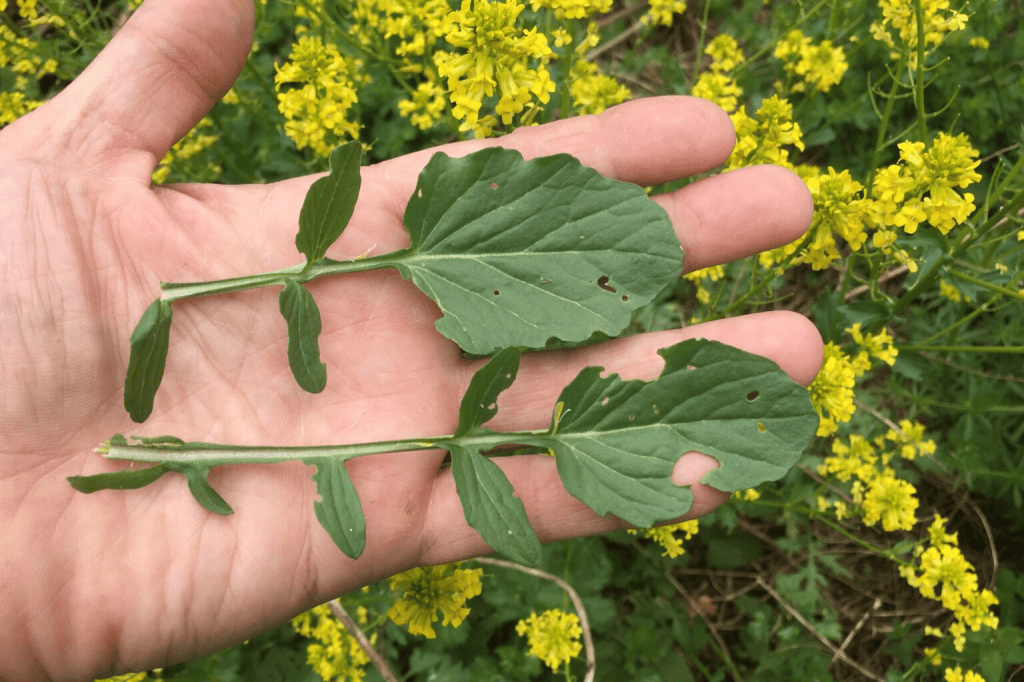
Wintercress already grows wild on this land, and I have transplanted it and improved the soil so that it’s seeds can sprout more easily. It’s one of the few greens that stays green through winter, and it’s one of the first to give us fresh leaves in spring. It isn’t as abundant and easy to grow as the other wild edibles on this land, but it keeps delighting and surprising me as I find this helpful plant nestled in various places including the fenced organic garden.
Getting to know wintercress
Wintercress, also called yellow rocket, is in the mustard family. In its first year, it makes a low rosette of shiny, dark green leaves that stays green all winter. In its second spring, it sends up stalks of bright yellow flowers. It then makes seedpods, drops its seeds, and new plants come up. The flowers are one of the first to show up in early spring, and I love that.
The leaves taste sharp and a bit bitter, like a strong mustard green. They’re mildest in the coldest months and before the plant flowers.
How to grow much more of it
- Let some plants go to seed. This is the easiest way. After the yellow flowers fade, leave a few plants to make their long, thin seedpods. When the pods dry and turn tan, cut the stalks.
- Save and spread the seed. Shake the dry stalks over a paper bag to collect the seed. Scatter it where you want new plants.
- Sow in late summer or fall. Wintercress likes to start in cool weather, so sow the seed from late August through October. Press it lightly into the soil, since the seeds are tiny.
- Pick a good spot. It grows in full sun or part shade and likes moist, rich soil. It grows best in fertile ground and slows down in dry, poor soil.
- Move them young. Wintercress grows a stout taproot, so move small plants only, or sow right where you want them.
- Keep picking. Harvesting the outer leaves keeps the plant making more.
A close cousin, upland cress, is sold as seed by many seed companies. It grows the same way and is a little milder.
How to eat it
- Mix young leaves into salads with milder greens. I like to chop up wild greens very fine, and the bitterness is not so apparent.
- Cook the leaves like mustard greens. Cooking softens the bitterness.
- Pickle or ferment them, as in my article on keeping garden greens through the winter.
Something to know
Wintercress is best eaten in moderation. Its leaves contain natural compounds that, in large amounts, may be hard on the kidneys. Mixing it with other greens is the best way to enjoy it.
How we wrote this together
This article was written by Patricia Mikkelson with Claude, an AI assistant made by Anthropic. Patricia shared her wish to grow more wintercress, and Claude researched how.


[…] Wintercress: Growing a Lot More of a Winter Green […]
LikeLike
[…] Wintercress: Growing a Lot More of a Winter Green […]
LikeLike