In short: A wet spot isn’t always a spring, but some springs start out looking like nothing more than a seep or a puddle. Watching a spot through the seasons will tell you most of what you need to know. If it’s a true spring, a little careful work can turn it into a clean, steady water source.
These are suggestions from our own research and experience, not professional advice. See the full note at the end.
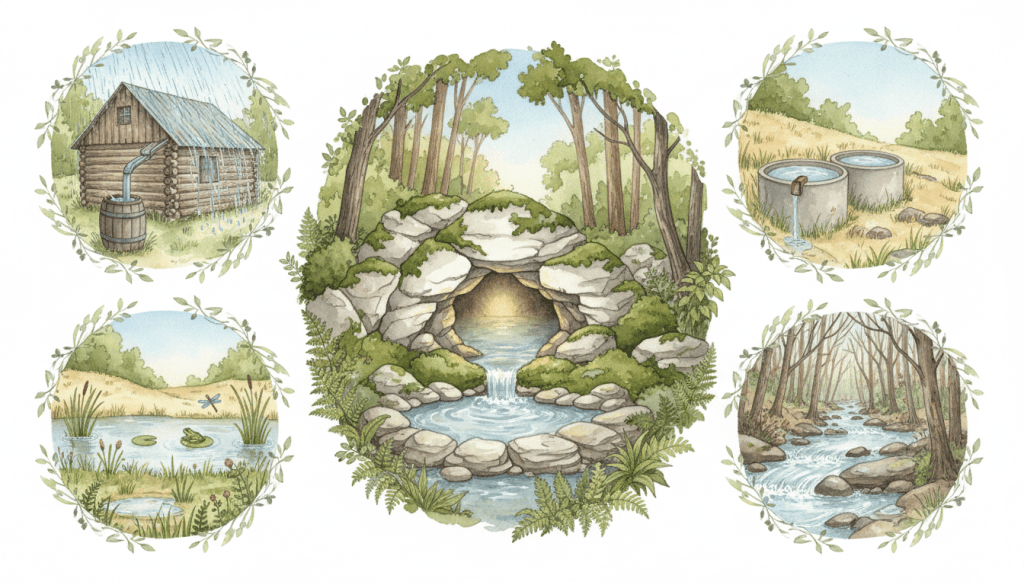
Seep, puddle, or spring?
- A puddle is rainwater sitting in a low spot. It shrinks and disappears after a few dry days.
- A seep is groundwater slowly oozing out of the soil. The ground stays damp or muddy, but you may not see water flowing.
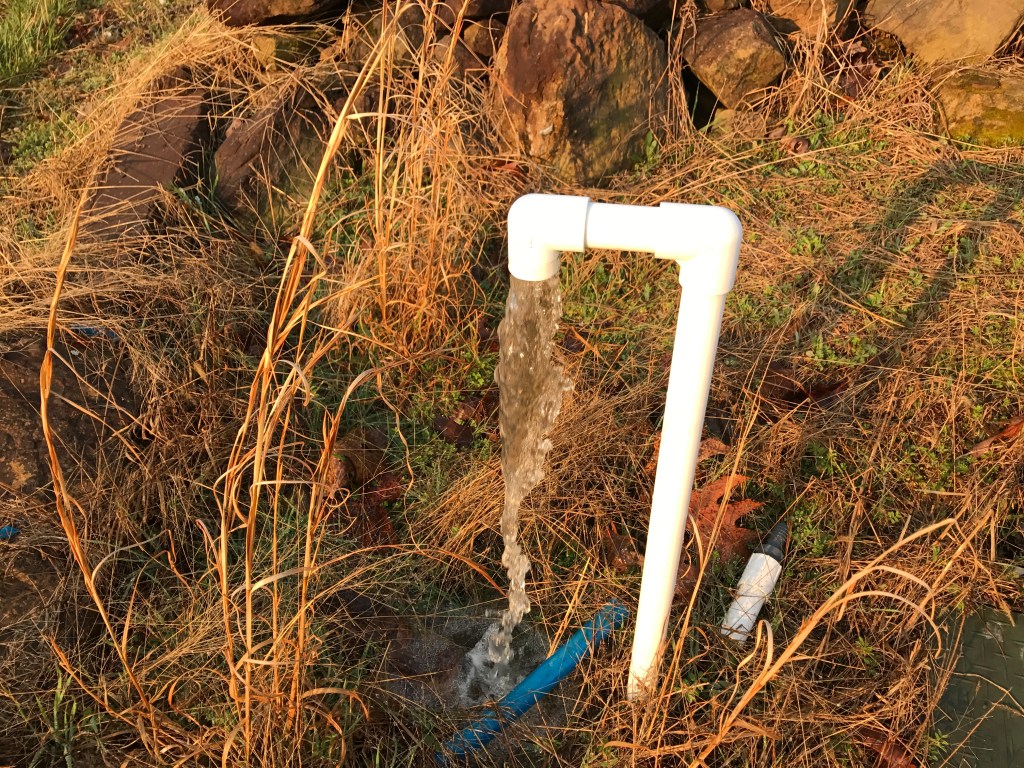
- A spring is groundwater coming out of the earth with enough force to flow, at least part of the year. Some springs run year-round; others only run in wet seasons.
Many springs hide under leaves, soil, or rock and show up only as a seep. That’s why a wet spot is worth watching.
Signs that a wet spot may be a spring
- It stays wet during dry weather. This is the most important sign. Rainwater dries up; groundwater keeps coming.
- The water feels cool in summer and stays unfrozen in winter. Groundwater in the Ozarks stays at a fairly steady cool temperature year-round.
- Water-loving plants grow there. Look for sedges, rushes, ferns, moss, cattails, or watercress, especially plants that stay green in late summer when everything else is brown.
- Animals visit it. Deer and other wildlife often wear paths to water.
- It sits at the foot of a slope or along a rock ledge. In the Ozarks, water often travels underground through limestone and comes out where a rock layer meets the surface.
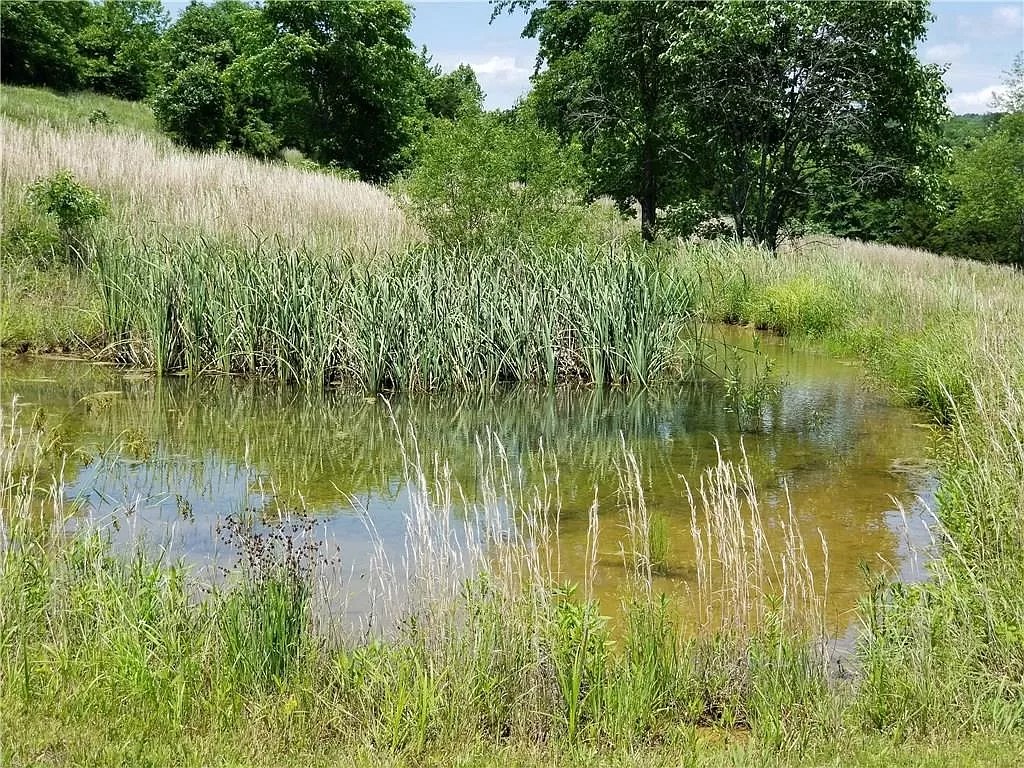
How to watch a wet spot through the seasons
- Mark the spot with a stake or flag so you can find it again.
- Take a dated photo from the same place once a week, and again after heavy rain and after a week or more without rain.
- Check the temperature with a simple thermometer. Water that stays steady from season to season points to groundwater.
- Watch hardest in late summer and early fall. If the spot is still wet in the driest time of year, you may have a spring.
- Keep a simple log: date, weather, wet or dry, and any flow you see.
A full year of watching tells you far more than a few weeks.
How to uncover and develop a spring
If the spot stays wet through a dry season, you can carefully look for the source.
- Dig gently into the wettest area, uphill from where the water appears, to find where it comes out of the ground or rock. Go slowly; you want to uncover the flow, not disturb it.
- Measure the flow. Once water is running, time how long it takes to fill a one-gallon bucket. Do this in different seasons.
- Build a spring box. The usual method is to bed the source in clean gravel, set a covered concrete or plastic box over it, and run a pipe from the box to where you’ll use or store the water. An overflow pipe lets extra water escape. A tight cover keeps out leaves, animals, and surface water.
- Protect the area uphill. Keep animals, compost, and anything that could pollute the water away from the spring and the slope above it.
- Test the water before drinking it. Ozark springs move through limestone that can carry surface contamination quickly. Your county health unit can test for bacteria.
To learn more about keeping spring water safe, read How Safe Is a Spring? Why What Lives Uphill Matters.
Getting help
The USDA Natural Resources Conservation Service (NRCS) has a standard practice for spring development and can give technical advice, and sometimes cost-share help. Contact your local conservation district office to ask.
What this means at the Living Springs Log House
The cave spring behind the log house has filled two cisterns for nine years, so we know this land has groundwater. You can read its story in The Cave Spring: Where the Water Comes From. There are two more wet places worth watching: a seep on the upper part of the property near the house, and a spot on the lower part of the property where a puddle has been seen holding water. We have only watched them a short time, so we make no promises. Whoever comes next will have the fun of watching them through the seasons and finding out.
Full note: The suggestions here are our best understanding from research and our own experience living on the property. We are not well drillers, engineers, or water specialists. Before developing a spring or drinking from one, please consult a qualified professional and have the water tested.
How we wrote this together: This article was written collaboratively by Patricia, a friend of Barbara’s and a resident of the Living Springs Log House, and Claude.ai, the AI assistant made by Anthropic.
See more of the property at livingspringsloghouse.com


[…] It is our hope that whoever comes next will find more. There are a couple of wet places worth watching. On the upper part of the property, near the house, is a wet spot that could be called a seep. On the lower part of the property, a puddle has been seen holding water. We haven’t checked these spots consistently through every season, so we can’t say whether they are springs, and we make no promises. The Ozarks are full of hidden water, though, and anyone who loves this land is welcome to look for themselves and watch them through a wet season. To learn how, read Is It a Spring? How to Find One, Watch One, and Bring One to Life. […]
LikeLike
[…] (a covered collection box with an outlet pipe), and piping the water to a tank or pond. Our article Is It a Spring? explains each […]
LikeLike
[…] Pond site: A site where water flows freely from the spring into what was once a pond; with some excavation, it could be restored into a pond again. Read more: Is It a Spring? How to Find One, Watch One, and Bring One to Life […]
LikeLike
[…] Is It a Spring? How to Find One, Watch One, and Bring One to Life […]
LikeLike