In short: A rocket stove can do more than heat the main house. This article covers heating the basement suite from outside, reworking the metal building’s barrel stove, keeping animals warm in winter, and other uses. Start with Part 4 for how rocket stoves work and what they cost.
Part 5 of the Living Springs Log House Improvement Checklist. It follows Part 4: Rocket Stoves for Heat and Cooking. These are suggestions, not professional advice. See the full note at the end.
Heating the Basement Suite from Outside
An indoor wood stove is not a good fit for the walk-out basement suite. But the fire does not have to be inside. One possibility is a rocket heater that sits outside, in a small shed or against the basement wall, and heats water instead of air. The hot water travels through insulated pipes into the suite, where it warms radiators or a radiant floor, moved along by a small pump that could run on solar power. The fire, smoke, and ashes all stay outdoors, and only the warmth comes in.
This is the same idea behind the outdoor wood boilers many rural families already use, with the cleaner burn of a rocket design. It would need careful planning: protection against freezing pipes, a design suited to the space, a check with insurance, and someone willing to tend the fire on cold days.
A Rocket Stove for the Metal Building
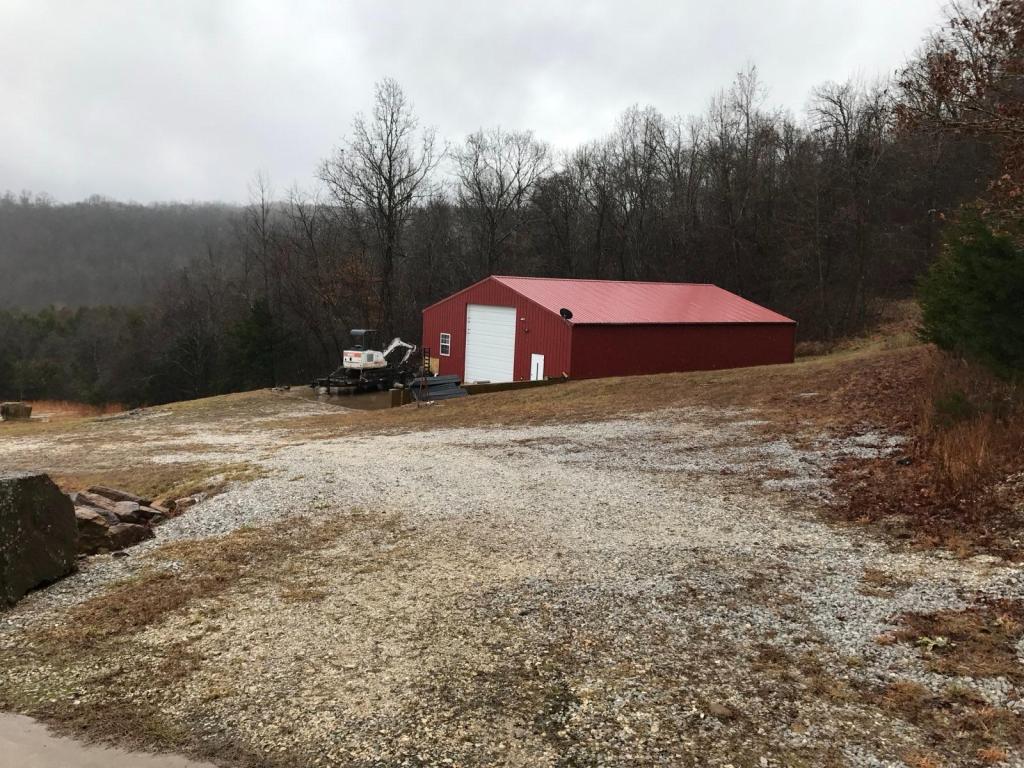
The metal building already has a double-barrel stove, made from two 55-gallon metal drums, and a chimney already in place. That is a real head start, because a 55-gallon steel drum is exactly what many rocket heater builders use. In a classic rocket mass heater, a drum sits over the heat riser like a bell. The hot gases rise inside it, the steel radiates warmth into the room, and the exhaust then travels on toward the chimney.
- Reuse a drum as the bell over a new insulated burn chamber and heat riser.
- Keep the existing chimney for the exhaust, checked and cleaned first.
- Add thermal mass: a cob, stone, or brick bench the exhaust passes through, to hold the heat for hours after the fire goes out.
- Burn far less wood with far less smoke than the current barrel stove, which works more like a conventional woodstove.
A warm metal building (and this one is insulated) opens up many uses in winter: a comfortable workspace, a place for volunteers or caretakers to gather, or a warm room for starting seeds.
Keeping Animals Warm in an Open Shelter
Most farm animals do not need heat. Goats, sheep, cows, horses, pigs, and chickens grow thick winter coats or feathers and handle Ozark winters well. What they need is protection from wind and wet. Heating an open shelter mostly warms the outdoors, fire near straw is a real danger, and animals that move between a heated space and cold air are more likely to get sick.
- Unfrozen water. This is where a rocket stove can help, warming a water tank or trough so the animals always have water to drink.
- Deep bedding. Layering fresh straw or leaves on top of old bedding through the winter lets the bottom layers slowly compost, giving off gentle warmth from below.
- Windbreaks. Close in the north and west sides, and keep the opening facing south, away from winter winds.
- Extra hay. Digesting hay makes body heat, like a small furnace inside each animal.
- Dry, draft-free shelter that still lets fresh air flow through.
Other Ways a Rocket Stove Could Serve
- Outdoor kitchen on the back patio of the house: soups, beans, and summer canning, without heating up the house.
- A gathering place for sharing meals outdoors.
And in Summer?
A rocket stove takes care of heat, not cooling. Our article Staying Cool Without Air Conditioning covers screened windows, shade, a whole-house fan, and opening the house to cool night air. Together, rocket heat for winter and natural cooling for summer could carry much of what an aging heating and air system does now.
A Step Toward Self-Reliance
The log house already has some of the pieces of a self-reliant life: the cave spring feeding two cisterns, gardens, a spacious metal building, and woods all around. A rocket stove adds one more: warmth and cooking from fallen wood, with very little waste and very little smoke. Rocket stoves can be built from bricks, cinder blocks, or salvaged materials, and they are a skill as much as a tool, something that can be learned, taught, and shared.
Gentle Cautions
- Any fire needs respect: clear the area, keep water nearby, never leave it unattended.
- Burn only dry, untreated wood.
- Any heater connected to a home or metal building needs careful design and a check of local codes and insurance before building.
A Few Insights
- The fire can stay outside while the warmth comes in.
- What is already on the land, two steel drums and a chimney, can become the start of something better.
- Animals mostly need shelter, dry bedding, and unfrozen water, not a heater.
A note on these suggestions: The repairs and improvements described here are our best understanding from research and our own experience living on the property. We are not contractors, engineers, or licensed inspectors, and these may not be the best or only solutions. Before starting any repair or project, please consult a qualified professional, such as a contractor, drainage specialist, or home inspector, who can look at the site in person.
How we wrote this together: This article was written together by Patricia, a resident of the Living Springs Log House, and Claude.ai, the AI assistant made by Anthropic. Patricia brought the details of the metal building’s double-barrel stove and the questions of heating the basement suite and keeping animals warm; Claude helped with background on how rocket stoves work and shaped the ideas into an article. The illustration was created with AI.
The Living Springs Log House Improvement Checklist
- Part 1: Catching the Rain
- Part 2: From Cedar Thicket to Sanctuary Pasture
- Part 3: Water and Shelter for a Sanctuary Pasture
- Part 4: Rocket Stoves for Heat and Cooking
- Part 5: Rocket Stoves Beyond the House (this article)
- Part 6: Re-Screwing the Metal Roof, Safely
- Part 7: Staying Cool Without Air Conditioning
- Part 8: Staying Cool, Room by Room
- Part 9: Caring for the Cypress Siding
- Part 10: Forest Mulching
- Part 11: Small Gaps, Honest Fixes
- Part 12: A Quieter Log House: Soundproofing
See more of the log house, the spring, and the gardens at www.livingspringsloghouse.com
Related articles
- Rocket Stoves, Clean Fire for a Self-Reliant Life: The Living Springs Log House Improvement Checklist, Part 4
- Staying Cool Without Air Conditioning: The Living Springs Log House Improvement Checklist, Part 7
- The Insulated Metal Building Has the Potential for Multiple Uses, Including a Living Space
- Potentially Living Off the Grid, Gently: Self-Sufficiency at the Living Springs Log House


[…] with fallen sticks, cook and bake with the same fire, and keep working when the power goes out. The second half covers the basement suite, the metal building, and the […]
LikeLike
[…] Central forced heat and air (propane and electric), plus a large propane wall heater in the kitchen/dining room as a power-outage backup. Read more: Rocket Stoves, Clean Fire for a Self-Reliant Life and Rocket Stoves Beyond the House […]
LikeLike
[…] Part 5: Rocket Stoves Beyond the House […]
LikeLike
[…] Part 5: Rocket Stoves Beyond the House […]
LikeLike
[…] Part 5: Rocket Stoves Beyond the House […]
LikeLike
[…] Part 5: Rocket Stoves Beyond the House […]
LikeLike
[…] Part 5: Rocket Stoves Beyond the House […]
LikeLike
[…] Part 5: Rocket Stoves Beyond the House […]
LikeLike
[…] Part 5: Rocket Stoves Beyond the House […]
LikeLike
[…] Part 5: Rocket Stoves Beyond the House […]
LikeLike
[…] Part 5: Rocket Stoves Beyond the House […]
LikeLike
[…] Part 5: Rocket Stoves Beyond the House […]
LikeLike