In short: Once the land that has grown up over the past nine years is cleared and made into pasture again, rescued animals will need water and shelter close by. This article covers the spring water already flowing to the pond site, four kinds of shelter, and a realistic timeline. Start with Part 2 for clearing the land.
Part 3 of the Living Springs Log House Improvement Checklist. It follows Part 2: From Cedar Thicket to Sanctuary Pasture. These are suggestions, not professional advice. See the full note at the end.
The Metal Building: Better for People Than for Animals
The existing metal building sits across the driveway from the land that could be made into pasture again. Moving animals across the driveway every day would be stressful and risky for them and for the people caring for them. And most animals don’t like being closed in a metal building with a concrete floor. The metal building is better used as a gathering place, a possible living space, a makers’ space, and a place to store feed and equipment.
So we recommend building the animals their own barn on their own side of the driveway, out where the pasture will be, ideally near the pond site. Of course, where it finally goes is up to the new owners.
Water Is Already Here
One of the best things about this part of the land is that the water is already here. There is a pond site in this area that could easily be dug out into a pond. And there is already a culvert carrying water all the way from the spring. You can see water flowing out of it right now over by the pond site, if you can find it.
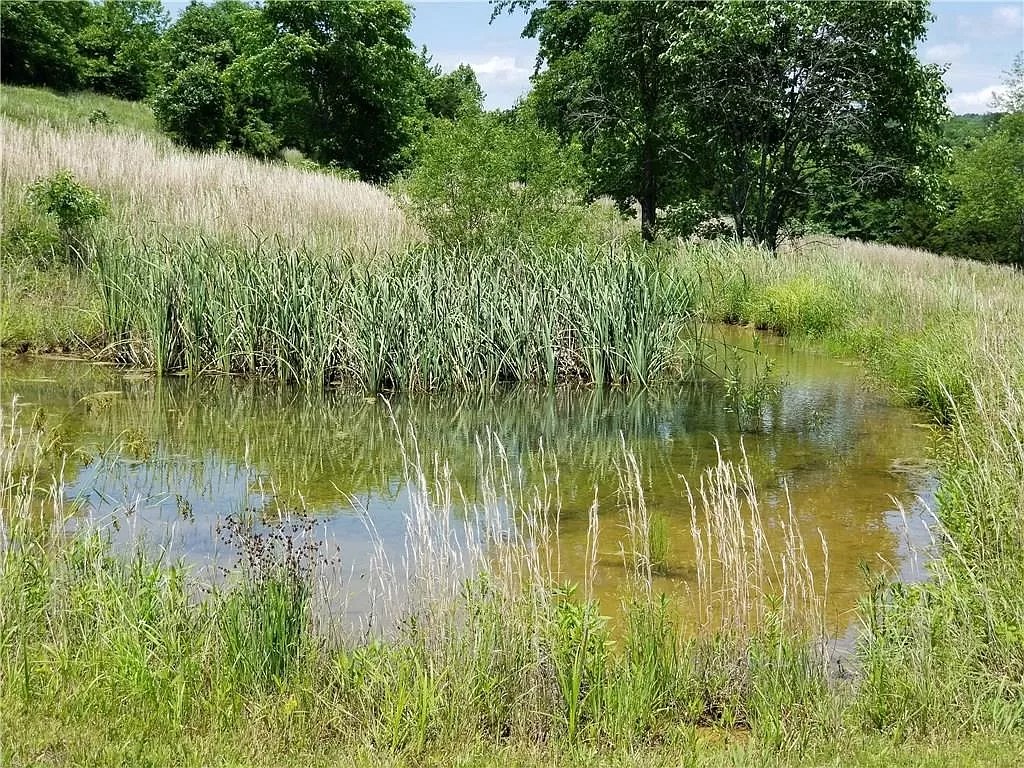
That makes this a perfect place for watering the animals, and for their barn too, on the higher, drier ground nearby. The residents could graze, drink, and rest all within a short walk, and a dug pond would welcome frogs, dragonflies, and birds as well.
What Kind of Shelter Should the Animals Have?
Most grazing animals do not need, or even want, a closed building. They need a dry place out of the wind, the cold rain, and the hot sun, with plenty of fresh air. Several simple designs fit the land and the budget.
1. The Three-Sided Run-In Shed (our first choice)
This is the classic sanctuary shelter: a roof, three walls, and one long open side. Animals come and go as they please.
- Orientation: Open side facing south or southeast, back wall to the northwest wind. The low winter sun shines in, and the summer sun stays overhead.
- Frame: Built pole-barn style using the cedar trunks from our own clearing as posts, set in the ground on the high, dry spot we marked.
- Roof: Metal roofing, sloped toward the back so rain runs away from the open front. Add a gutter and a rain barrel or tank, and the roof also helps water the animals.
- Size: A shed about 12 by 24 feet comfortably shelters a small mixed group of goats and sheep. Add length as the family grows. Larger animals such as cows or horses need much more room, roughly 100 to 150 square feet each.
- Floor: Packed earth or crushed gravel with deep bedding of straw. Build the floor up a few inches higher than the surrounding ground so it stays dry.
2. The Cattle-Panel Hoop Shelter
Bend 16-foot livestock panels into an arch, fasten them to a wooden base, and cover them with a heavy tarp or greenhouse plastic with shade cloth on top. One or two people can build one in a weekend for a modest cost. It is ideal for goats, sheep, pigs, and smaller animals, and a good way to start housing residents quickly while the larger shed is being built.
3. Portable Skid Shelters
Small shelters built on wooden skids can be dragged from paddock to paddock with a tractor or truck. They move with the rotational grazing, so manure is spread evenly and no single spot turns to mud. These work beautifully for small groups or for animals who need to be kept apart.
4. Living Shelter
Alongside any built structure, the keeper trees and the cedar windbreak along the north edge are shelter too. A pasture designed with shade islands and a windbreak means the built shelter is used mostly in storms, cold rain, and the worst of summer heat.
Shelter Essentials
- A dependable water source close by, ideally gravity-fed from a roof catchment or a frost-free hydrant.
- A small enclosed corner or adjoining stall for sick, injured, or newly arrived animals.
- A dry spot for storing a few days of hay and feed.
- Good drainage all around, and a sacrifice area near the shelter with gravel so that wet weather does not turn the pasture to mud.
A Realistic Timeline
- October through December: Walk and flag the land. Brush hog the first paddock if you want quick results. Cut cedars. Build brush berms. Set fence and shelter posts. Seed cool-season grasses where ground is open.
- January through February: Finish clearing. Raise the shelter roof. Frost-seed clover.
- March through May: Complete fencing. Plant warm-season and native seed. Bring in the first residents, ideally goats and sheep, once grass and fence are ready.
- June through August: Rotate animals through lespedeza while it is tender. Mow what they miss before it flowers.
- Year two and three: Keep cutting new cedar seedlings while they are small, keep rotating, and watch the grass take over.
Land That Heals, Animals That Heal
There is something fitting about this work. Land that was cleared and abandoned becomes a home for animals who were also once considered disposable. The cedars that crowded the field become the posts that shelter the residents. The lespedeza nobody wanted becomes food. The brush becomes soil. Nothing is wasted and no one is thrown away.
This is the kind of restoration we long to see everywhere: patient, practical, and full of care for every creature the land supports.
A Few Insights
- The land supplies its own building materials: cedar posts, brush berms, mulch, and bedding.
- Most grazing animals need a dry, airy barn by their pasture, not a closed metal building with a concrete floor.
- Working with the seasons turns years of waiting into a season or two of shared work.
A note on these suggestions: The repairs and improvements described here are our best understanding from research and our own experience living on the property. We are not contractors, engineers, or licensed inspectors, and these may not be the best or only solutions. Before starting any repair or project, please consult a qualified professional, such as a contractor, drainage specialist, or home inspector, who can look at the site in person.
How we wrote this together: This article was written together by Patricia, a resident of the Living Springs Log House, and Claude.ai, the AI assistant made by Anthropic. Patricia brought her knowledge of the pasture, the pond site and culvert, the metal building, and her vision of a farm animal sanctuary; Claude researched shelter designs and shaped it all into an article. The illustration was created with AI.
The Living Springs Log House Improvement Checklist
- Part 1: Catching the Rain
- Part 2: From Cedar Thicket to Sanctuary Pasture
- Part 3: Water and Shelter for a Sanctuary Pasture (this article)
- Part 4: Rocket Stoves for Heat and Cooking
- Part 5: Rocket Stoves Beyond the House
- Part 6: Re-Screwing the Metal Roof, Safely
- Part 7: Staying Cool Without Air Conditioning
- Part 8: Staying Cool, Room by Room
- Part 9: Caring for the Cypress Siding
- Part 10: Forest Mulching
- Part 11: Small Gaps, Honest Fixes
- Part 12: A Quieter Log House: Soundproofing
See more of the land, the spring, and the gardens at www.livingspringsloghouse.com
Related articles
- From Cedar Thicket to Sanctuary Pasture: The Living Springs Log House Improvement Checklist, Part 2
- From Dream to Sanctuary: Creating a Farm Animal Sanctuary at Living Springs Log House
- A Farm Animal Sanctuary Already Written Into the Living Springs Log House Property
- This Land Could Be a Farm Animal Sanctuary


[…] season or two. This article covers cutting cedars, managing lespedeza, brush hogging, and seeding. The second half covers water, shelter, and a […]
LikeLike
[…] Read more: A Farm Animal Sanctuary Already Written Into the Property, From Dream to Sanctuary, From Cedar Thicket to Sanctuary Pasture, and Water and Shelter for a Sanctuary Pasture […]
LikeLike
[…] Read more: A Farm Animal Sanctuary Already Written Into the Property, From Dream to Sanctuary, From Cedar Thicket to Sanctuary Pasture, and Water and Shelter for a Sanctuary Pasture […]
LikeLike
[…] We don’t recommend it. Animals would have to cross the driveway to reach it, and most animals don’t like being closed in a metal building with a concrete floor. The metal building works well for feed, supplies, and people. Much of the land was cleared years ago and has grown up over the past nine years. It could be cleared and made into pasture again, and we recommend building a barn out there, ideally near the pond site, though of course that’s the new owners’ choice. Read Water and Shelter for a Sanctuary Pasture. […]
LikeLike
[…] About 55% land that was cleared years ago and has grown up over the past nine years (it could be made into pasture again), 5% garden and lawn, and 40% forest, with roads running throughout. Read more: From Cedar Thicket to Sanctuary Pasture and Water and Shelter for a Sanctuary Pasture […]
LikeLike
[…] Water and Shelter for a Sanctuary Pasture […]
LikeLike
[…] Part 3: Water and Shelter for a Sanctuary Pasture […]
LikeLike
[…] Part 3: Water and Shelter for a Sanctuary Pasture […]
LikeLike
[…] Part 3: Water and Shelter for a Sanctuary Pasture […]
LikeLike
[…] Part 3: Water and Shelter for a Sanctuary Pasture […]
LikeLike
[…] Part 3: Water and Shelter for a Sanctuary Pasture […]
LikeLike
[…] Part 3: Water and Shelter for a Sanctuary Pasture […]
LikeLike
[…] Part 3: Water and Shelter for a Sanctuary Pasture […]
LikeLike
[…] Part 3: Water and Shelter for a Sanctuary Pasture […]
LikeLike
[…] Part 3: Water and Shelter for a Sanctuary Pasture […]
LikeLike
[…] Part 3: Water and Shelter for a Sanctuary Pasture […]
LikeLike