By Patricia Mikkelson and Claude
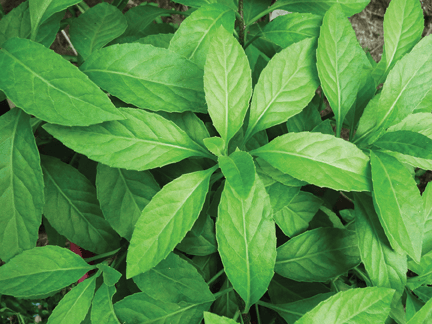
About four years ago, I bought a longevity spinach plant. I still have it. Every winter, I bring it inside. Every spring, once it’s warm, it goes back out. And along the way, I’ve made more plants from it. Think about this as another potential cash crop. People propagate this and send it in the mail. That’s how I got mine. And I sold it at the Madison County Farmer’s market. This article plus the video below gives you a lot more information about its value. I think you will be impressed!
What longevity spinach is
Longevity spinach isn’t true spinach. It’s a tropical plant from Southeast Asia, with the botanical name Gynura procumbens. It is a true super food! It grows as a soft, leafy vine with glossy green leaves. In the tropics, it lives for years. Here in the Ozarks, it can’t take our winters, so it has to come inside.
Bringing it in for the winter
- Bring it inside before the first frost. Mature plants can survive a light frost, but not a long cold spell.
- Keep it near a sunny window, where it’s warm.
- Water less in winter. Let the soil dry a little between waterings.
- Don’t worry if it slows down. It will grow again when the days get longer.
Making new plants
Longevity spinach is one of the easiest plants to multiply:
- Cut a piece of stem with two or three leaves on it.
- Push it into moist potting soil, or set it in a glass of water until roots form.
- Keep the soil moist and the cutting warm. Within a few weeks, it roots and puts out new leaves.
Seeds are very hard to start, so cuttings are the way to go. One plant can become many, which makes it a wonderful plant to share.
Putting it back outside
- Wait until nights are warm and there’s no chance of frost.
- Choose a spot with partial shade. Too much hot afternoon sun can make the leaves bitter.
- Pick the leaves often. Regular picking keeps the plant bushy.
Eating it
The leaves are mild and tender. Eat them raw in salads or smoothies, or cook them in soups and stir-fries. When cooked, they get a little slippery, like okra. The leaves contain some oxalates, which cooking reduces.
How we wrote this together
This article was written by Patricia Mikkelson with Claude, an AI assistant made by Anthropic. Patricia shared her four years of growing longevity spinach, and Claude added the growing details.


[…] Four Years With Longevity Spinach […]
LikeLike
[…] Four Years With Longevity Spinach […]
LikeLike