By Patricia Mikkelson and Claude
Walk anywhere on this land and you’ll step on plantain. It grows along the paths, in the garden beds and in the mowed grass. Most people call it a weed. I call it one of the most useful plants we have.
What it is
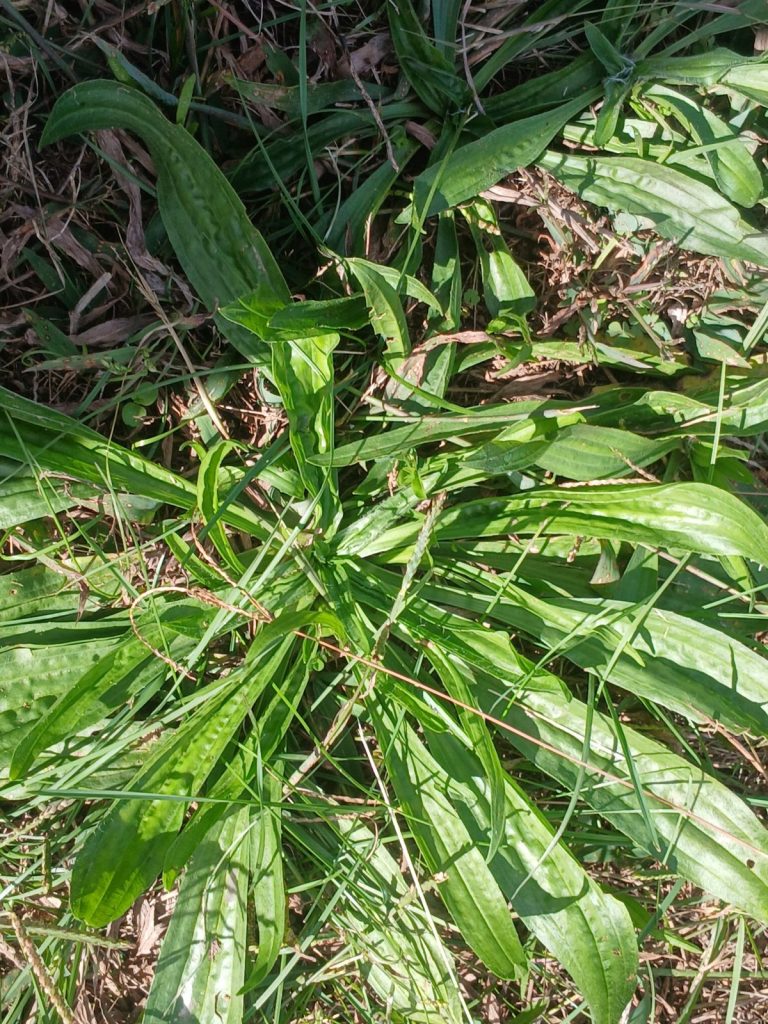
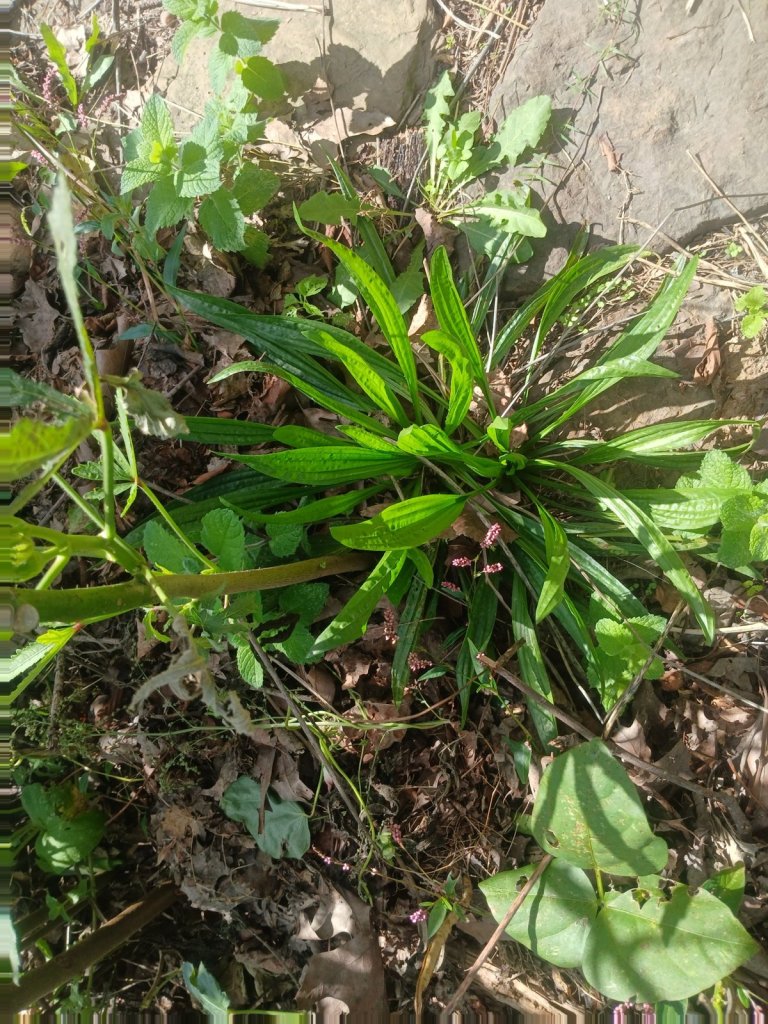
The plantain here is mostly narrowleaf plantain, also called ribwort. It has nothing to do with the banana-like plantain. You can tell it by its long, narrow leaves with strong ribs running lengthwise, all growing from a rosette at the ground.
How people have used it
- As food. The young leaves from the center of the plant are the most tender. They can go in salads, soups or a pot of greens. Older leaves are stringy, so they’re better cooked or added to broth.
- On the skin. For hundreds of years, people have crushed or chewed a fresh leaf and laid it on bug bites, bee stings and small scrapes. Many people say it eases the itch and sting.
- For salves. Plantain is a favorite in homemade salves, soaked in oil and blended with plant wax.
Why there’s so much of it
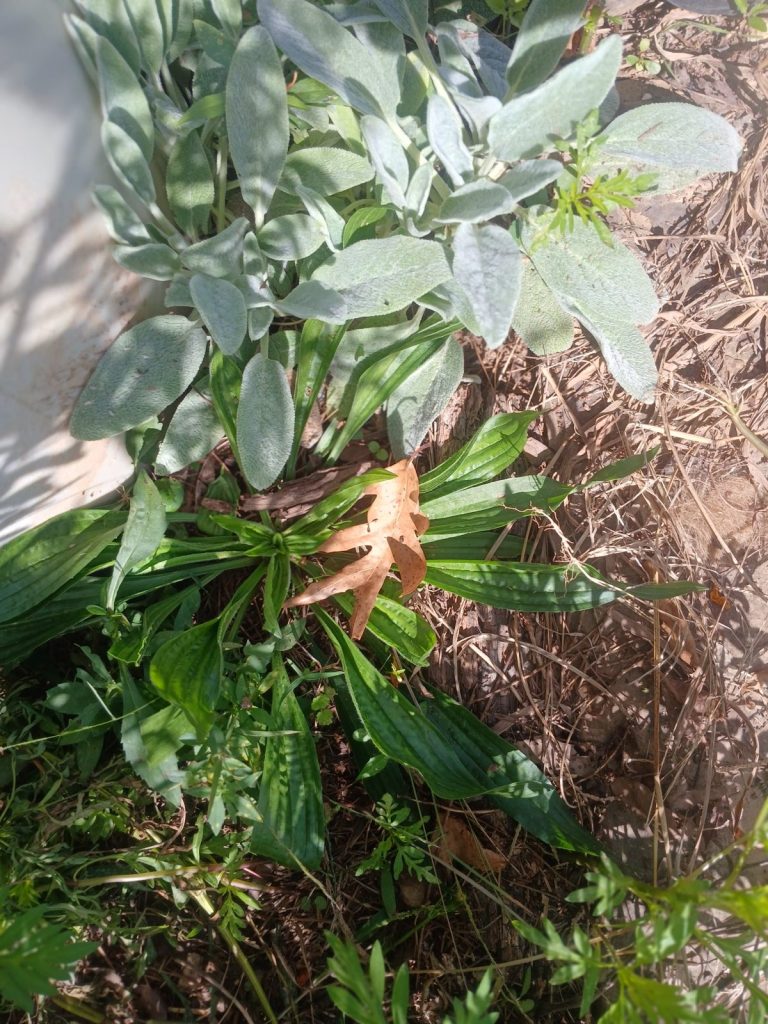
Plantain thrives in packed soil where other plants struggle. Its roots help break up hard ground, so it’s actually healing the soil where it grows. Each plant also makes thousands of tiny seeds, which is why one patch becomes many.
A plant nursery idea
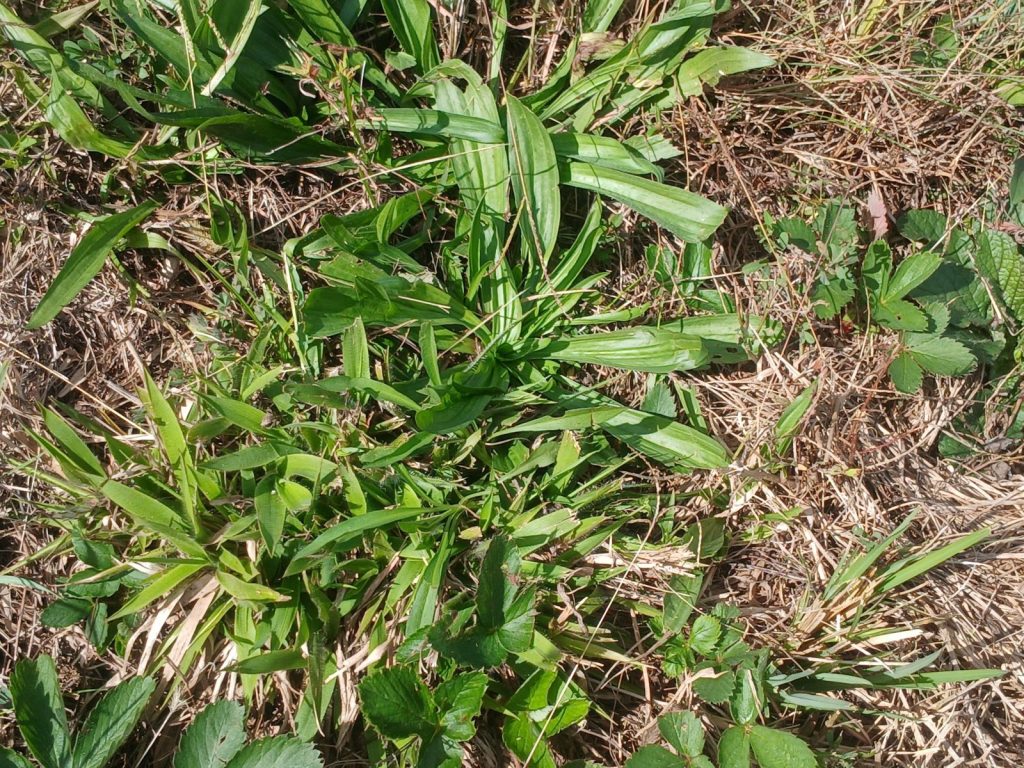
With this much plantain, apple mint and wild strawberry on the land, a small plant nursery could be a natural next step. Potted plants and starts could be sold at local markets, and the plantain could go into vegan salves. It’s one more way this land could support the people living on it. You can read more in A Little Plant Nursery and Homemade Salves and The Healing and Edible Plants of Living Springs.
How we wrote this together
This article was written by Patricia Mikkelson with Claude, an AI assistant made by Anthropic. Patricia shared her photos and knowledge of the land, and Claude helped put it into words.
This article shares my own experience and isn’t medical advice. Please make your own health decisions with whoever you trust.


[…] Plantain: The Healing Weed Growing All Over the Living Springs Log House Property […]
LikeLike