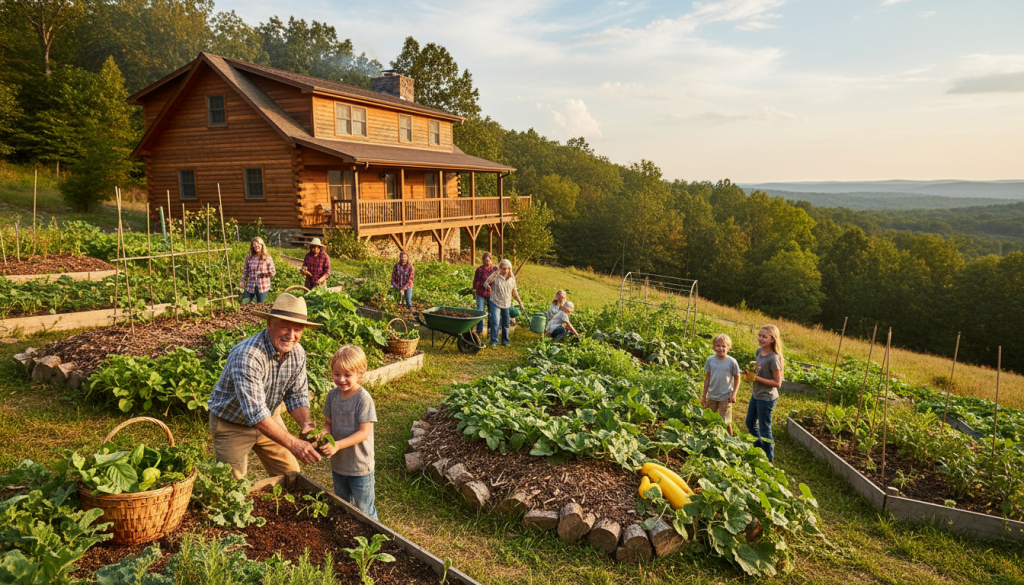
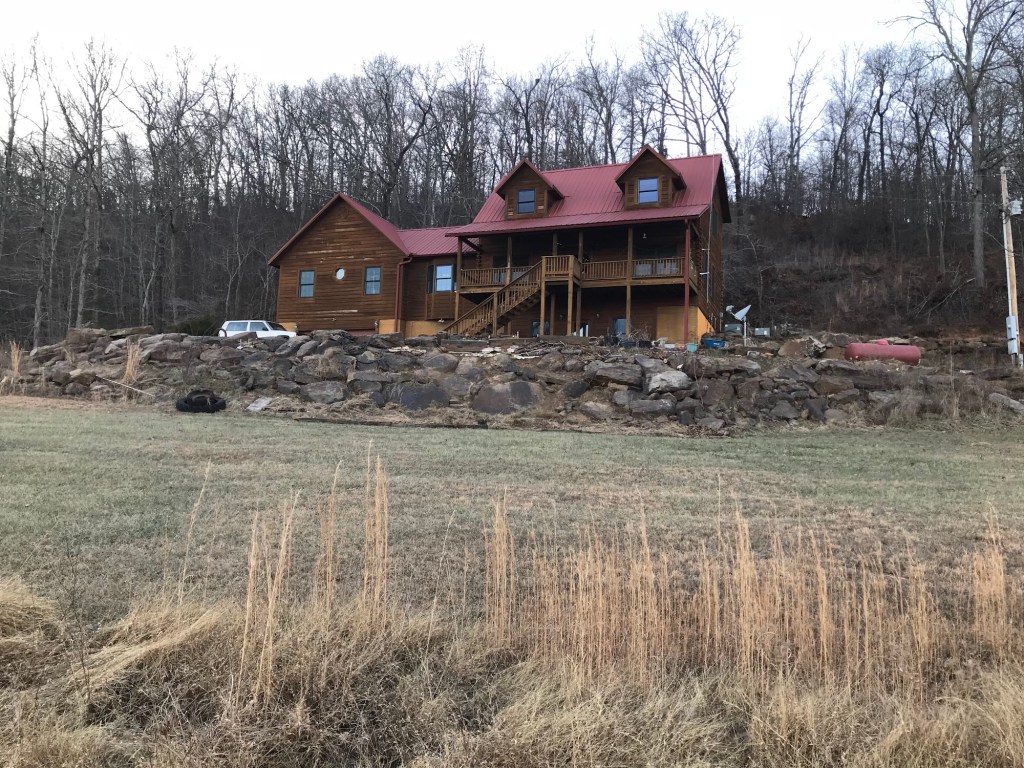
I’ve lived at the Living Springs Log House since 2017. Over those years I’ve built up gardens all over this land. Now that my friend Barbara Hulley, who owns the property, is selling it, we both would love for it to go to someone who will carry it forward as a veganic permaculture homestead: a place where food is grown with no harm to animals, and where the land is cared for like a living system.
What veganic permaculture means
Permaculture designs gardens and homesteads to work like natural ecosystems, with each part supporting the others. Veganic (vegan organic) growing feeds the soil with plants instead of animal products like manure, blood meal or bone meal. Put together, veganic permaculture builds rich soil from leaves, compost, cover crops and living roots, and lets the land feed the people without using animals.
How I came to permaculture
I’ve known about and practiced organic gardening since I was 21, around 1975 or 1976. I first discovered it in the Garden of Eden at San Diego State University. There was an emphasis on growing berries, tree crops and plants that come up every year, and that really made sense to me.
So when I discovered permaculture in 1999, it was like, oh yeah, this really fits. Permaculture filled in a lot of the blanks, and I continue to learn about it. I’m passionate about it. I’ve never gotten certified, but when I became vegan, I realized I wanted to be more of a purist when it came to growing things, and I was delighted to find The Vegan Book of Permaculture, which I own.
I feel confused about how many permaculture teachers say you have to have animals, and animal inputs like manure, for a permaculture system to work. Veganic growers show that a garden can thrive on plants, compost, mulch and cover crops, without using animals at all.
It would be fantastic for every square inch of this land to be put to use: forest gardens, and the woods used for growing mushrooms. Mushrooms are such a great vegan crop, since they help replace meat, and they can even be made into vegan mushroom leather. But of course, veganic permaculture is mostly about growing food. A growing number of people around here love healthy, locally grown food. Many of our neighbors have gardens, but many don’t, so they might love a CSA, a weekly share of fresh produce from the farm.
Where the gardens stand today
The gardens here haven’t been completely veganic. A resident kept chickens, so a small amount of chicken manure was used over the years. When my son and daughter-in-law lived here, they used some rabbit manure. And back when bats lived in the attic of the house, the bat guano we swept up from the ground went into the gardens. I also once buried some bones that a meat eater needed to get rid of, so they wouldn’t go to waste.
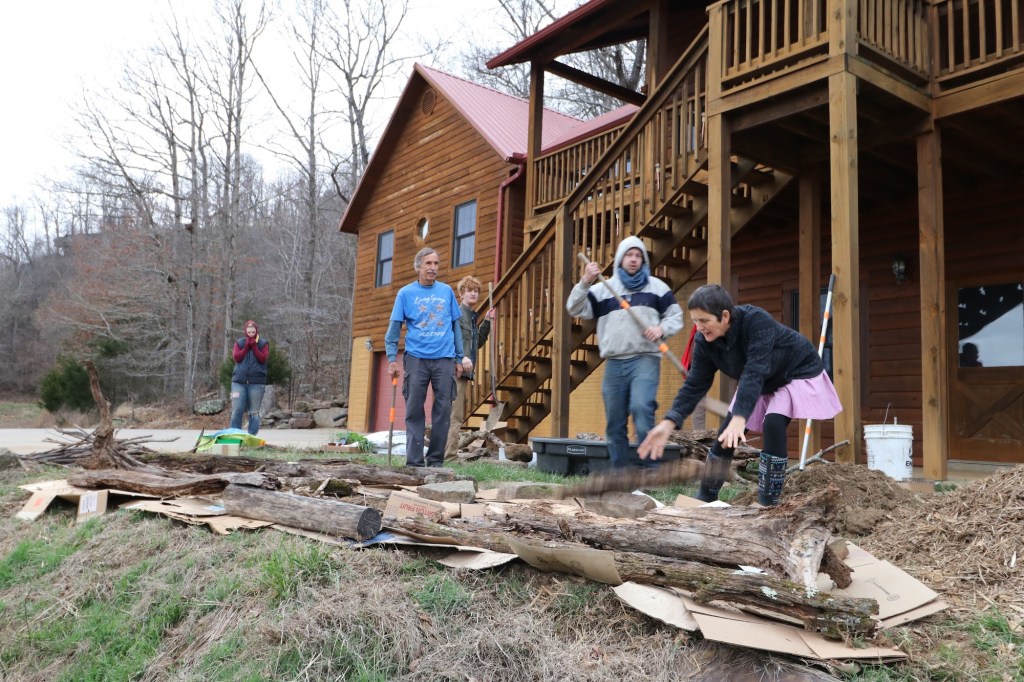
Still, nearly all of the organic matter, probably 99.99 percent, came from plants and plant materials: leaves, cardboard, food scraps, wood chips, pine needles, comfrey, comfrey tea, grass clippings, ashes, rotting wood from hugelkultur beds, and unwanted plants I cut or pulled up. A little sand and peat moss were added too, in very small amounts.
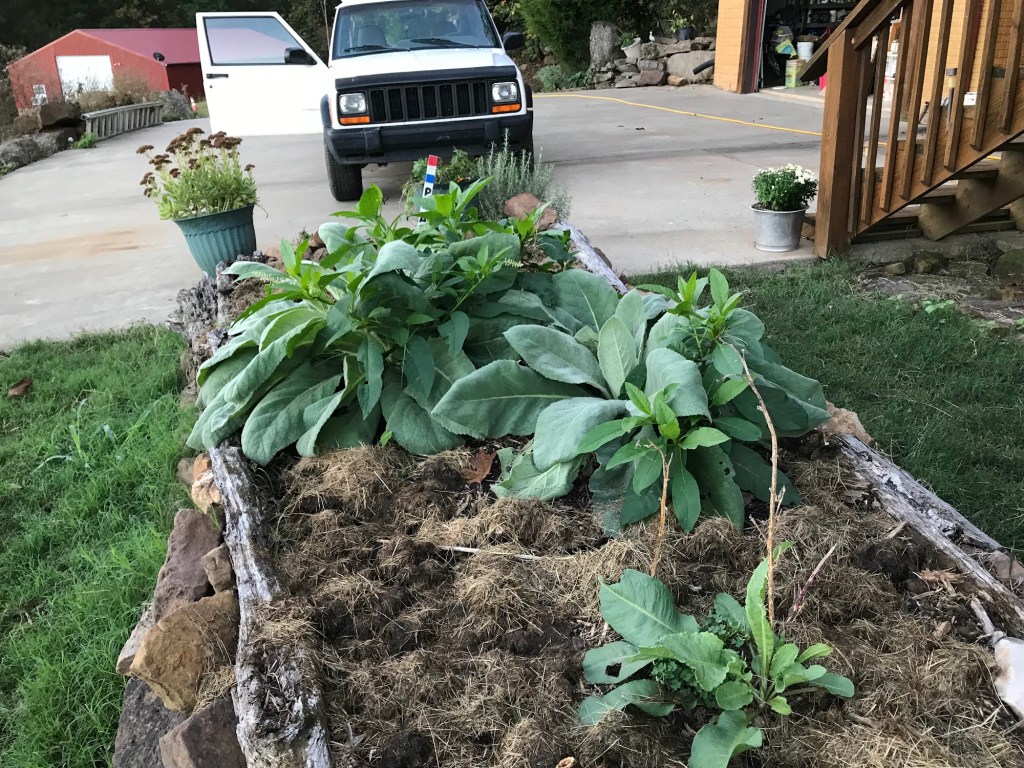
So the gardens have been grown mostly the veganic way, and there’s a lot here to build on:
- Many named gardens, each with its own character: Child’s Garden, Simple, Flow, Edge, Butterfly, Glad, Founding, Big Rock, Circle and the Vegetable garden.
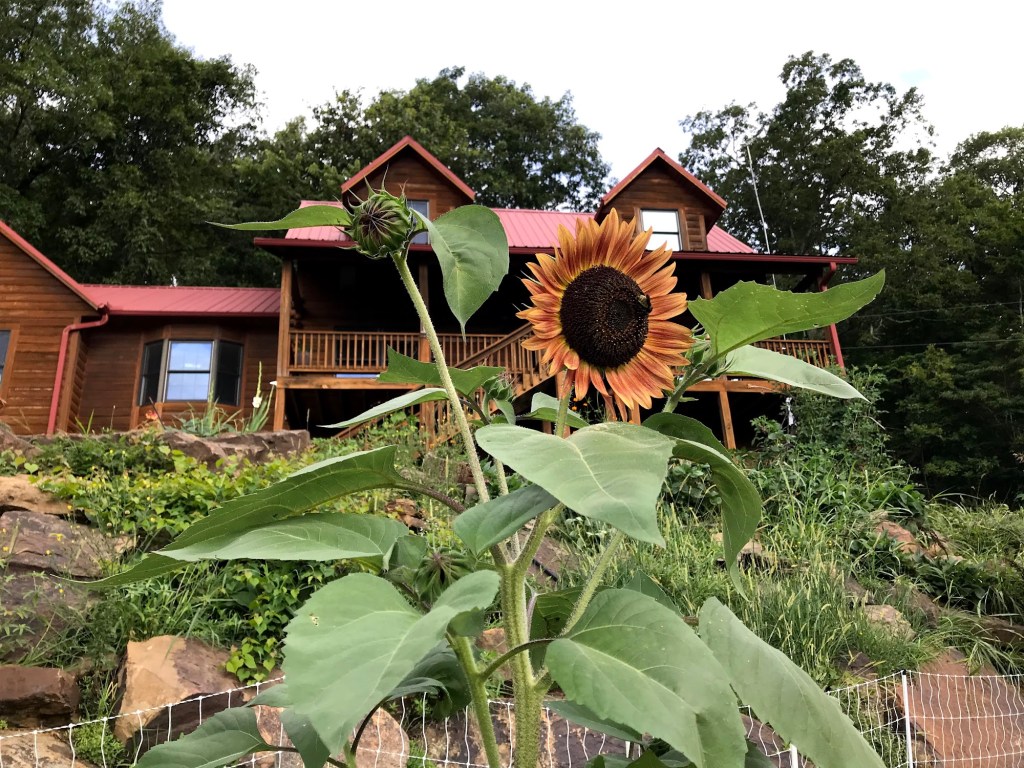
- An upper garden right in front of the house, mostly wild edibles, medicinal plants, herbs, flowers and pollinator plants.
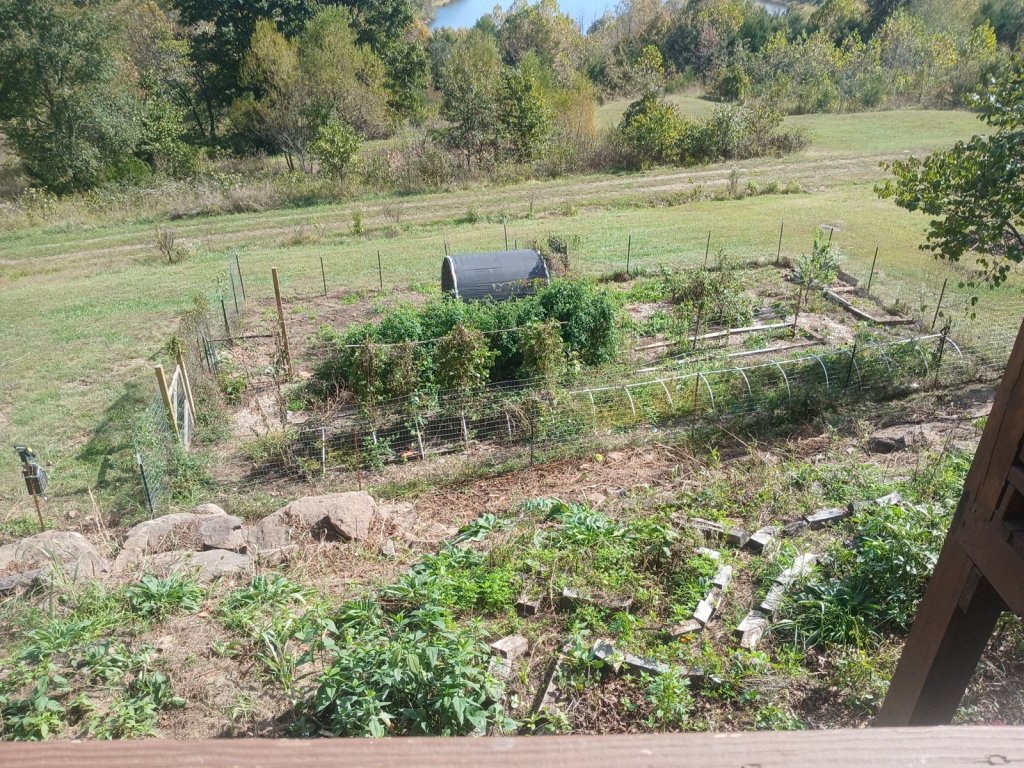
- A fenced (non-electric) 40 by 55 foot organic garden below it, mainly for vegetables, that I built up over the years.
- Three 8-year-old fruit trees, two apple and one pear. They’ve been a bit neglected, but with pruning and care they’re ready to become the start of an orchard.
- Perennials that keep coming back, like comfrey, herbs, bulbs and plants grown from saved seed.
- Wild and healing plants all over the land, like plantain, dock, violets, chickweed and wintercress.
- Hugelkultur ideas, forest mulching and a rock cascade between the upper and lower gardens that can be planted too.
The land and water
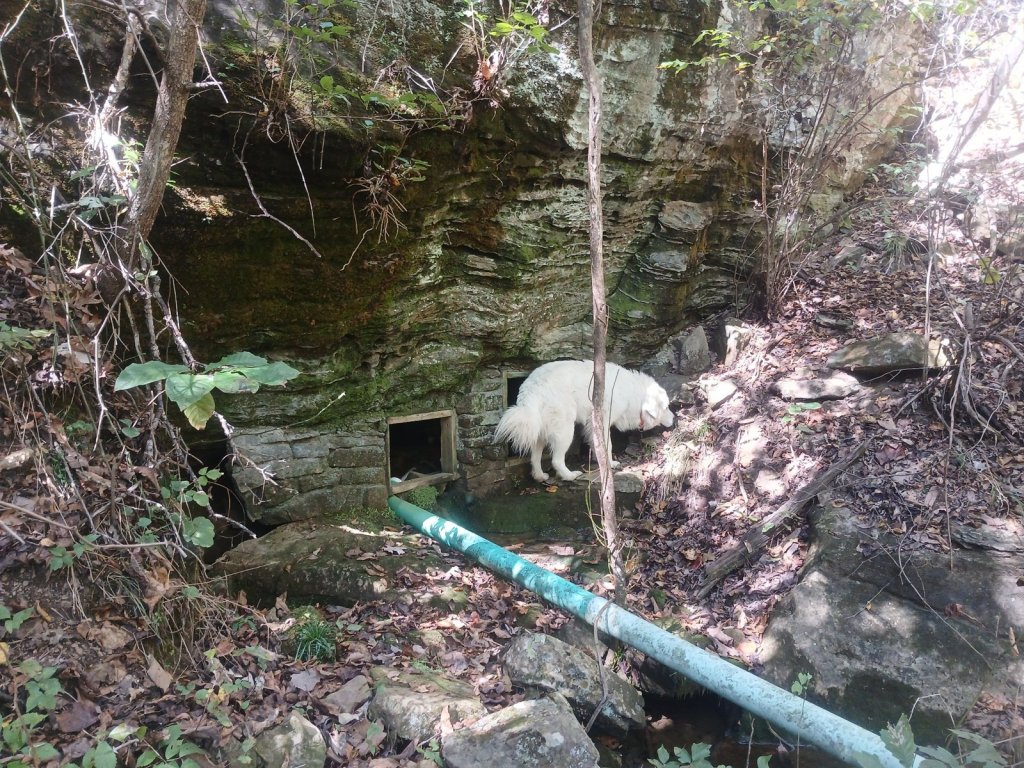
- A cave spring that has kept our two cisterns full enough for everyday use since 2017. The only times they ran short were when a hose was left running or a technical problem came up.
- A shady, moist hardwood hillside behind the house, well suited to shiitake logs.
- Land that was cleared about nine years ago and has grown up since. It could be cleared again for a food forest, an orchard or a market garden.
- A sawmill about 10 minutes away, a nearby source of free sawdust and wood chips for mulch, paths and mushroom beds.
- 40 more acres for sale next door, with room for an orchard or a much larger food forest.
Buildings that help
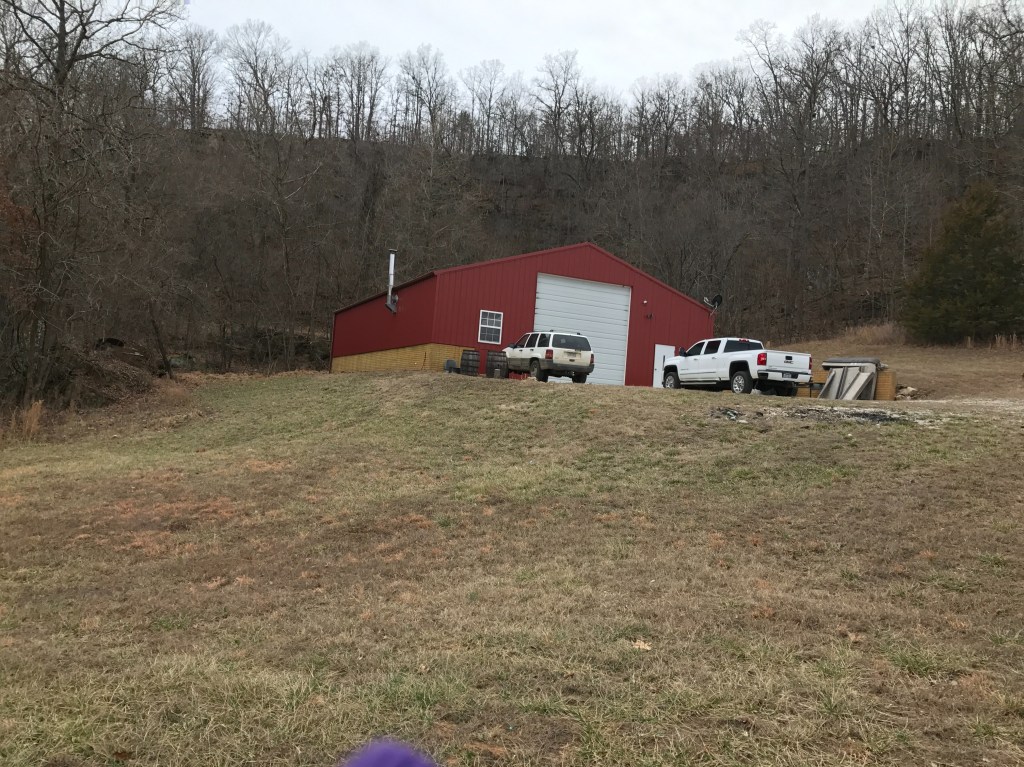
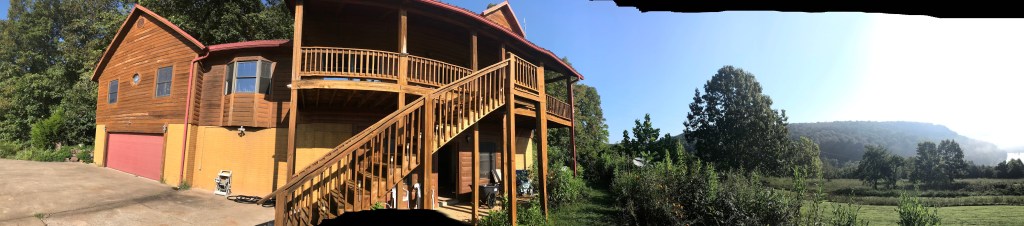
The insulated 40 by 60 metal building has power, water, a bathroom and its own septic. It could become a packing and washing room for a market garden, a seed-saving and plant nursery space, a mushroom farm, or a classroom for veganic gardening workshops. The house itself is a hybrid cypress log home, with a walk-out basement suite that has its own entrance, so a small community of growers and their families could live here together.
Some ideas for a veganic future
- A food forest of fruit and nut trees, berries and perennial greens.
- A veganic market garden with a CSA, a weekly share of fresh produce for subscribers.
- Selling at the growing number of farmers markets in Northwest Arkansas, including the Huntsville, Goshen and Eureka Springs farmers markets.
- A plant nursery and homemade salves from the herbs already growing here.
- Shiitake and oyster mushrooms in the metal building and on the hillside, and mushrooms grown in the woods. Mushrooms can help replace meat and can even become vegan mushroom leather.
- Veganic gardening classes, open garden days and volunteer weekends. Permaculture and organic gardening are topics gaining a lot of momentum in this region.
- A vegan community or farm animal sanctuary living alongside the gardens.
A few insights
- Veganic land doesn’t have to start perfectly. Soil keeps changing, and a few seasons of plant-based compost, mulch and cover crops can carry a garden fully into veganic growing.
- Water is the foundation. A spring and cisterns make every other dream on this land possible. There are water spreading systems in place that can help spread out the rain water and overflow from the cisterns during wet weather.
- The land has already started the work. Established gardens, perennials and wild plants mean a new steward isn’t starting from bare dirt.
Learn more
- Six Ways to Belong, the Vegan Way
- The Permaculture Map: What We First Dreamed for This Land
- Hugelkultur: Building Garden Beds From Logs, Leaves, and Time
- Comfrey: The Plant I Planted Once and Never Had to Plant Again
- A Mushroom Business in the Metal Building
- Learn Veganic, Veganic World: Find a Farm, Plants For A Future and the vegan permaculture section of the Animal Earth Alliance Directory
The Living Springs Log House Is for Sale
Now offered at $465,000 (reduced by $10,000) for 14.75 acres near Huntsville, Arkansas. Listed with Lori Hawkins of Viridian Real Estate. See the Zillow listing, or call Lori at 479-301-6107.
See more of the gardens, the spring and the land at www.livingspringsloghouse.com.
How we wrote this together. The ideas, experiences and gardening knowledge in this article are Patricia Mikkelson’s: what she has grown at the Living Springs Log House since 2017, how the gardens have been tended, the research she has done on veganic growing, and her hope for a veganic future. Claude, an AI assistant made by Anthropic, helped write and organize the article and expanded the research on veganic and permaculture resources.


[…] more: Veganic Permaculture at the Living Springs Log House, Homesteading in the Ozarks, Potentially Living Off the Grid, Gently, The Garden That Grew From a […]
LikeLike
[…] 40′ x 55′ established organic garden. Read more: The Garden That Grew From a Trench and Veganic Permaculture at the Living Springs Log House […]
LikeLike