In short: Fall may be the most important planting season in the Ozarks. This guide covers when and how to plant spring bulbs, comfrey, garlic and other fall crops, broadcasting seed, and cover crops. A second guide covers working with rocky soil and designing a permaculture paradise.
Fall is the season most gardeners overlook, and it may be the most important one. The soil is still warm, the rains return, and the summer heat no longer stresses young roots. What you plant and prepare now sets up the whole next year. Here in the Ozarks, with our clay, our rocks, and our hungry deer, a little know-how goes a long way.
When to Plant Bulbs in Northwest Arkansas
Most of Northwest Arkansas falls in USDA zone 6b to 7a, so our timing runs a little later than many bulb packages suggest. Spring-blooming bulbs go in once the soil cools below about 60°F. In practice, that means late October through November, usually after the first couple of light frosts or once nights settle into the 40s.
You can keep planting into December as long as the ground isn’t frozen or soggy. Planting too early, while the soil is still warm, can coax bulbs into sending up leaves before winter, which weakens them.
Bulbs That Thrive in the Ozarks
- Daffodils. The single best bulb for our region. They return for decades, multiply over time, and deer, voles, and squirrels leave them alone because the bulbs are toxic to them.
- Crocus, snowdrops, and Siberian squill. These small bulbs bloom very early, sometimes in February, and give pollinators an early meal.
- Grape hyacinth (Muscari). Tough, cheerful, and spreads into carpets of blue.
- Hyacinths. Wonderfully fragrant, and they come back reasonably well here.
- Alliums (ornamental onions). Tall purple globes in late spring that bees adore and critters avoid.
- Dutch iris and Spanish bluebells. Both handle our climate well.
- Wild hyacinth (Camassia). An Arkansas native that tolerates clay better than most bulbs.
- Tulips. Beautiful, but deer love them, and our warm springs mean most varieties fade after a year or two. Treat them as annuals, or choose species tulips and Darwin hybrids, which last longer.
If deer or voles visit your yard, lean on daffodils, alliums, and grape hyacinth. They will save you a lot of heartbreak.
Preparing Hard Soil for Fall Planting
Most Ozark yards are heavy clay, rocky, or both. Bulbs rot in soggy clay, so good drainage matters more than anything else.
- Work the soil at the right moment. Dig a day or two after a rain, when the soil is moist but crumbles in your hand. Wet clay turns into bricks when you work it.
- Dig wide rather than deep. Loosen an area 8 to 12 inches deep and pull out the rocks as you go. Planting a group of bulbs in one wide hole is far easier than digging a dozen small ones.
- Mix in plenty of compost. Aim for about one part compost, leaf mold, or aged manure to two parts native soil. Don’t add sand to clay; the mix can set up like concrete.
- Raise beds in wet spots. Where water puddles after rain, mound the soil into a low berm or build a raised bed so roots sit above the wet.
- Go light on fertilizer. Bulbs carry their own food for their first spring. Compost is enough, or use a balanced organic bulb food. Bone meal is traditional but unnecessary, and it tends to attract dogs and digging critters.
Planting Bulbs Step by Step
- Set each bulb about three times as deep as it is tall, pointy end up. Daffodils and tulips go about 6 to 8 inches deep; small bulbs like crocus go about 3 to 4 inches.
- Plant in clusters of five, ten, or more rather than in single rows, so they look natural when they bloom.
- Water well after planting, then cover with 2 to 3 inches of shredded leaves or straw.
Can You Plant Comfrey in the Fall?
Yes. Early to mid-October is a good window, since the roots have four to six weeks to settle in before the ground turns cold. If you miss it, early spring works just as well. Plant root cuttings or crowns 2 to 4 inches deep and water them in.
Before you plant, choose the spot carefully. Comfrey is permanent. Any piece of root left in the ground grows a new plant, so it is nearly impossible to move or remove later. Good places include the edge of a garden, beneath fruit trees, or beside the compost pile. Look for the variety ‘Bocking 14’, which doesn’t spread by seed and stays where you put it.
Comfrey earns its place in a permaculture garden. Its deep roots pull minerals up from the subsoil and break through hard ground. Bees love the flowers. You can cut the leaves several times a season to lay down as mulch (called “chop and drop”) or soak them in water to make a rich liquid fertilizer.
What Else to Plant This Fall
- Garlic and shallots. Plant cloves from mid-October through November for a harvest next June.
- Perennial onions. Egyptian walking onions and potato onions can go in now and keep producing for years.
- Fruit trees, shrubs, and berry bushes. Fall through winter, while plants are dormant (roughly November through February), is the best time to plant woody perennials. Their roots grow all winter, so they arrive at summer stronger and better able to handle heat.
- Spinach. Sown in early October, it overwinters and gives an early spring crop.
- Native wildflower seeds. Many natives need winter cold to sprout, so sow them from November through February.
- Divisions of existing perennials. Daylilies, iris, hostas, and many herbs can be divided and replanted now.
Should You Broadcast Seeds?
Broadcasting, or scattering seed by hand, works very well for wildflowers and cover crops. A few steps make the difference between a good stand and a feast for the birds:
- Scratch the surface. Rake the soil so seed can reach bare dirt. Seed resting on grass or thatch rarely takes.
- Mix small seeds with sand. This helps you spread them evenly and see where they have landed.
- Sow in two directions. Scatter half the seed walking one way, then the other half walking crosswise.
- Press, don’t bury. Walk over the area or roll it to press seed into the soil. Most wildflower seeds need light to germinate, so leave them on the surface. Cover crop seed can be raked in lightly.
Cover Crops for an Ozark Fall
Cover crops protect bare soil over winter, feed soil life, and do a great deal of the work of loosening hard ground. These are good choices for October planting in Northwest Arkansas:
- Cereal rye. The top choice for hard soil. It can be sown through early November, and its large root system breaks up clay. Be sure to buy cereal rye, not ryegrass, which is a different plant.
- Crimson clover. Adds nitrogen to the soil and produces striking red blooms in spring that bees love. Sow by mid-October.
- Hairy vetch and Austrian winter peas. Both add nitrogen and grow well alongside rye.
- Oats. They die back in hard freezes and leave a ready-made mulch for spring planting.
A mix of cereal rye, crimson clover, and hairy vetch makes an excellent all-around blend. In spring, cut it down and leave it on the surface as mulch, then plant right through it.
Your Fall Checklist
- Early to mid-October: plant comfrey, sow crimson clover and other cover crops, sow spinach.
- Mid-October through November: plant garlic, shallots, and perennial onions.
- Late October through November: plant spring bulbs once soil cools below 60°F.
- Through early November: sow cereal rye on any bare ground.
- All fall: gather leaves and start sheet-mulched beds for spring.
- November through February: plant fruit trees, shrubs, and berry bushes, and broadcast native wildflower seed.
Ready for the next step? Read Rocky Soil and a Permaculture Paradise. Happy planting, and may your spring be full of blooms.
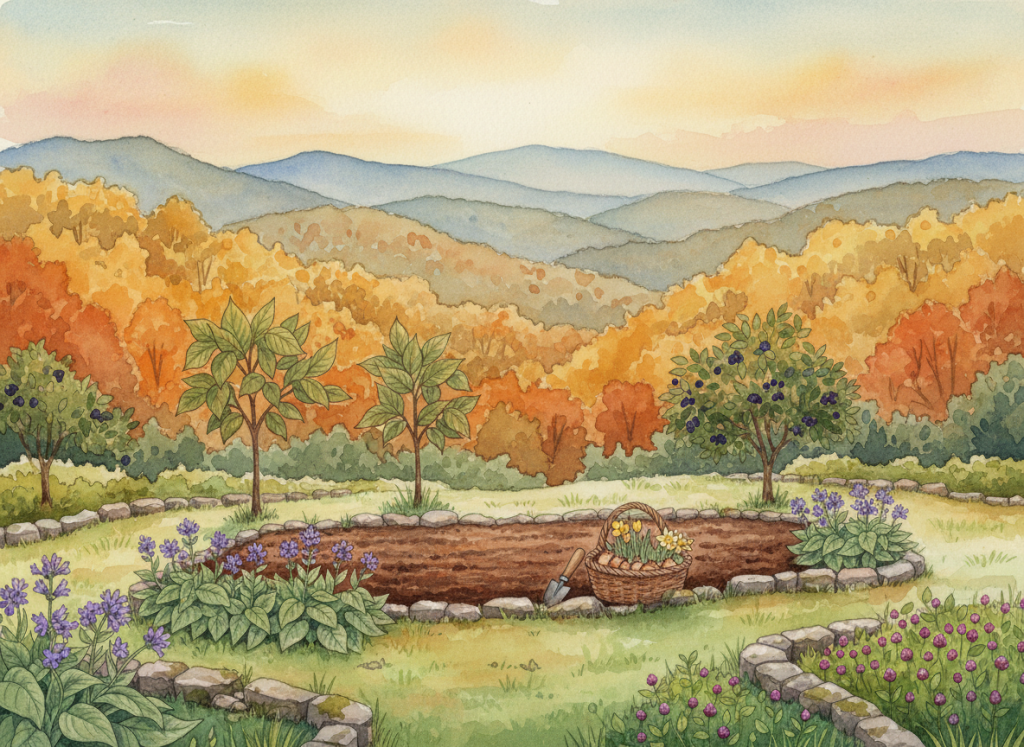
Find more stories about Ozark land, gardens, and homestead living at livingspringsloghouse.com. This article was written with the help of Claude, an AI assistant, and the illustration was created with AI.


[…] below, then design the land so it feeds people and wildlife with less work each year. Start with Planting a Paradise: A Fall Guide for what to plant this […]
LikeLike
[…] oregano thrive here, filling the gardens with color through spring, summer, and fall. Read more: Planting a Paradise and Rocky Soil and a Permaculture […]
LikeLike
[…] Planting a Paradise: A Fall Guide for Ozark Gardeners […]
LikeLike
[…] Planting a Paradise: A Fall Guide for Ozark Gardeners […]
LikeLike
[…] Planting a Paradise: A Fall Guide for Ozark Gardeners […]
LikeLike